Screen-Free Play: How AI Toys Help Kids Learn Without a Screen
By Curio Team
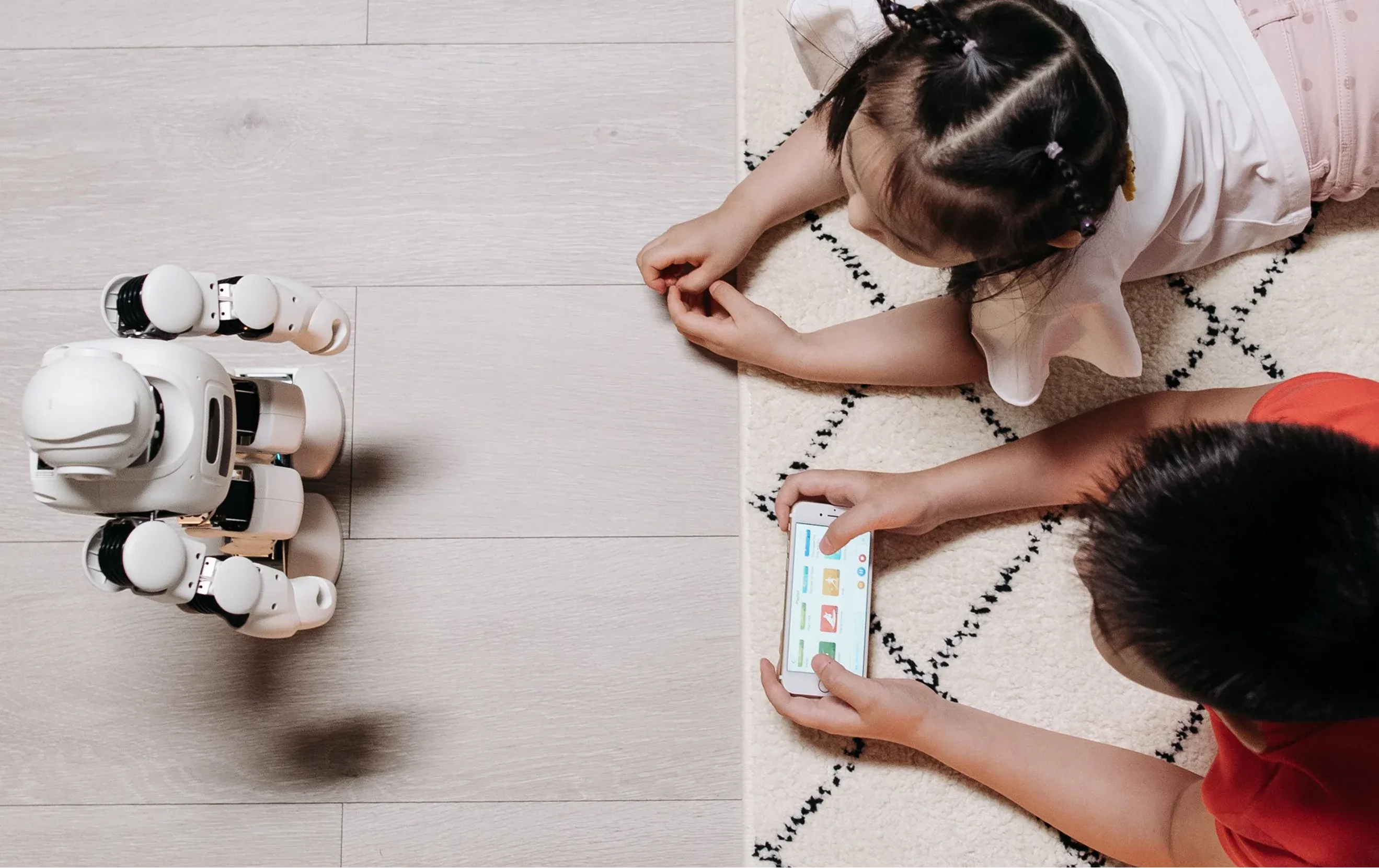
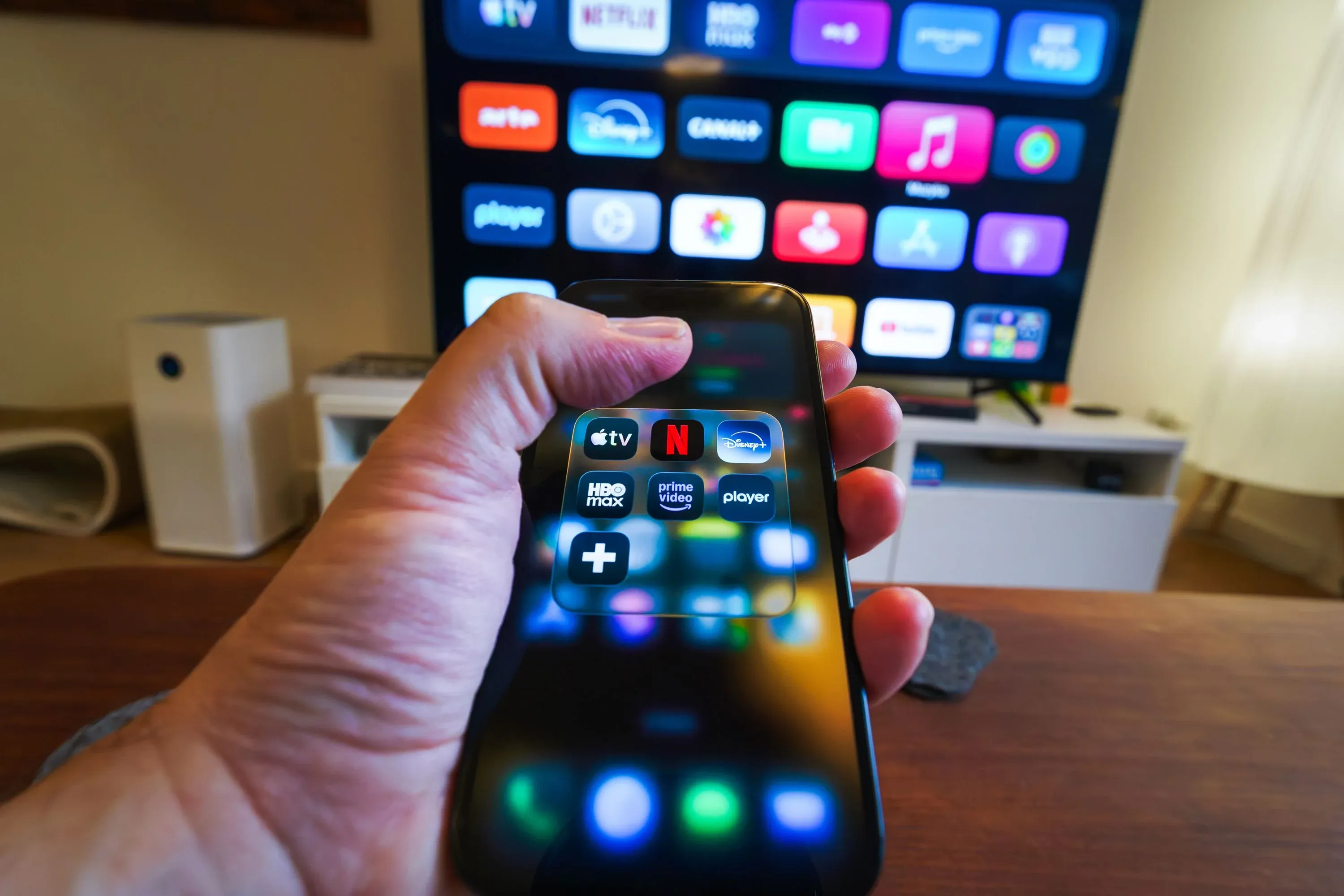
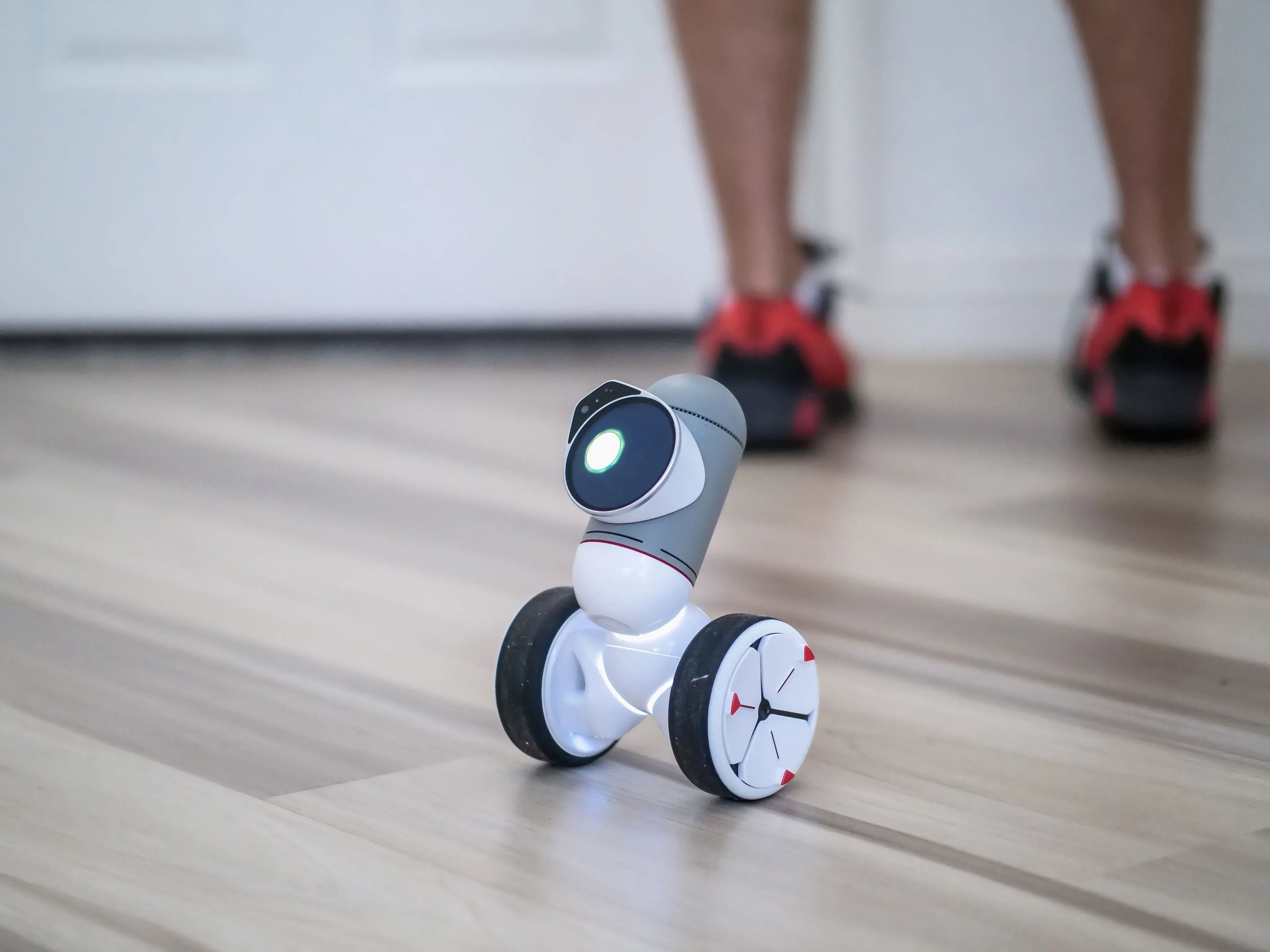
For a lot of parents, there's a guilt that hangs over them around their kids' "screen-time," and even when it's educational, there's a feeling that it's just not quite the same. But what if education for children outside a classroom could be not only screenless but actually fun? That's where AI toys come in. They fill a simple but useful gap: there's no screen, but there's still technology to interact with. However, not all "screen-free" devices are the same. Most toys that are screen-free don't include any technology at all. So it's important to ask what makes AI toys so special in this category, and why screens fall short compared to actual educational lessons.
This blog cites actual developmental research to make its case, but it's worth being fair that almost all of that research compares live human interaction to television or video, and even the "responsive" conditions in these studies used a real person reacting in real time, not a device. So it's hard to say for certain that AI toys will carry over the same benefits. However, there's still an interesting connection between the studies and the products that could prove useful. This blog is trying to bridge that gap, honestly, not conclusively.
How AI Toys Sidestep the Video Deficit Effect
Decades of developmental research have found that young children, specifically those under the age of three, consistently learn less from a video than they would from a live demonstration. A toddler who watches an adult hide a toy on video will struggle to find it in real life, even though a toddler who watches the same demonstration live usually succeeds, revealing some kind of disconnect between video and reality. Researchers originally called this the video deficit, and it's one of the more replicated findings in early childhood media research.
The Theory Behind It
The leading explanation isn't that screens are inherently bad at giving information, it's that most video is a one-way street, and children feel much more like a spectator than an active participant. A recorded model can't respond to the child at all, meanwhile a live performance can smile or adjust its pacing for the kid. Researchers sometimes call this a break in "social contingency," the back-and-forth responsiveness that live interaction provides. The theory has since been broadened into what's called the "transfer deficit," since the struggle isn't about screens themselves, it's about how kids learning something in a 2D space often can't apply it in a 3D one.
What Does the Research Say?
One of the clearest demonstrations of this effect comes from a study on 9-month-old infants trying to learn Mandarin Chinese speech sounds. The infants who sat with a live Mandarin-speaking tutor were able to understand the speech sounds. The infants who were exposed to a video version of the exact same lesson didn't learn anything. This study highlights how heavily an in-person tutor outpaced the video. The real open question isn't about the tutor, it's about the video: what if the video itself could respond to the child in real time? That's exactly what a different study, on a different skill, set out to test.
A different study looked at 24-month-olds and tested their imitation instead of language. The children were given a demonstration either by a live person, by a video, or by a person on a closed-circuit video who could respond to them. Interestingly, kids in the closed-circuit video group were able to imitate the task just as well as the kids who got an actual live demonstration. The kids who got a responsive source of learning learned more than the ones who got a non-responsive recording. A big reason researchers think they learned more is responsiveness, not the absence of a screen, as this study indicates.
It's important to note, though, that some newer research is actually observing the effect shrink over time, and at least one recent study using a social robot found no video deficit at all in two-year-olds. Researchers suspect this could be because children nowadays find video to be much more "meaningful" than they did 20 years ago. One study isn't the same as a body of research, so this doesn't erase the effect outright, but it does mean the finding is less settled than it used to be. The broader consensus still leans toward some version of the video deficit holding, just possibly a smaller one than it was 20 years ago.
For a full research breakdown and a longer-form article on the video deficit effect, check out our article (here).
What Actually Counts as "Screen-Free"?
Distinction Between Passive vs. Interactive Media?
In a child's brain, not all media is created equal. As we saw in the video deficit portion of this article, depending on how information is given to a child, they can have completely different takeaways. There are primarily two types of media a child consumes: passive media or interactive media. Passive media is like a wind-up toy that always makes the same sound, it doesn't react to what the child does at all, which makes it a one-way street. Interactive media is different, whether it has a screen or not, the changes are apparent immediately. When a child is given something that actually responds back to them, they'll want to interact with it more and see what else it does, it sparks curiosity. This is important because a screen can actually be passive media, like a video that's the same one-way street, the child can only observe it, and the video doesn't change whether the child is there or not. Interactive media is functionally closer to a responsive tutor than to passive media.
The Case for Voice-First Toys
The objection parents raise first is usually a fair and logical one: an AI toy has a microphone, a speaker, and a connection to the internet, so it's still technology, so how would it dodge the "video deficit"? Good question, but it's less about the plane of operation and more about the responsiveness of the interaction, and whether the exchange goes both ways. AI toys listen and then respond, creating a back-and-forth conversation. By doing this, it acts more like a responsive video feed than a recorded video, if we're sticking with the video analogy. AI toys are screenless, but they still have that back-and-forth loop that a responsive video feed would have. In the studies above, that gap was closed by responsiveness, so the loss of a screen only removes one more source of one-directional stimulation.
What The Research Says
Circling back to a study mentioned above, there's a study that introduced toddlers to new verbs in three ways: in person, through a live two-way video chat, or through a recording of a previous session that looked interactive but actually couldn't respond to the child in the room. Toddlers in the in-person group and the live video chat group learned the new words. The toddlers who watched the non-responsive recording, although it looked identical on the surface, did not. Researchers concluded that the appearance of interactivity isn't enough on its own, the responsiveness has to be real for the child to retain the knowledge.
For a full research breakdown and a longer-form article on interactive vs. passive tech, check out our article (here).
Screen Time Guidelines by Age: What Pediatricians Recommend
What Do Experts Say?
The two most cited sources here are the World Health Organization's 2019 guidelines for children under five and the American Academy of Pediatrics' updated 2026 policy statement. They were written a good amount of time apart from each other and take slightly different approaches, but they both come around to roughly the same conclusions and guidelines.
WHO’s Guidance
WHO recommends that children under a year old shouldn't get any screen time at all, and at age one, sedentary screen time is still discouraged. From ages two to four, WHO caps screen time at no more than one hour per day, notes that less is better, and specifically calls out interactive, non-screen activities with a caregiver, like reading, storytelling, or singing, as a better use of downtime than a screen. This cements their position as pretty much anti-screen for young children.
American Academy of Pediatrics ’ Guidance
The American Academy of Pediatrics statement takes a much more flexible approach. Rather than assigning one fixed number at every age, it describes a time limit that might range from under an hour a day for toddlers and preschoolers to one to two hours a day of entertainment media for school-aged kids and teens. AAP focuses on the quality of the content and the context mattering more than the number on the clock. It also states that infants younger than 18 months have a hard time transferring what they see on a screen into the real world, which mirrors the results we saw from the studies earlier. Researchers chalk this up to how immature that transfer process still is at this age, the same underlying idea behind the video deficit carrying over into this area.
Why Did the Guidance Shift?
The AAP shifted away from their 2016 guidance, which leaned on a fixed hours-per-day model, and moved to a more flexible, context-based one, since most children will grow up in a digital ecosystem that their parents and family use alongside them. Content matters significantly here: what would happen if we banned all screens for children? Is a video call with grandparents who live far away the same as watching YouTube videos for three hours? Although both would count as screen time, one clearly has much more value than the other.
Quick Reference: Screen Time by Age
- Under 12 months: Screen time isn't recommended (WHO). Video calls with family are generally treated as a separate category, not "screen time" in the traditional sense.
- 12–23 months: Sedentary screen time is still discouraged (WHO). If it's introduced, AAP recommends high-quality content watched together with a caregiver rather than solo viewing.
- 2–4 years: No more than 1 hour a day, and less is better (WHO). AAP's 2026 guidance lands in a similar place, generally under an hour, but weighs content quality and context more heavily than the exact number.
- 5 years and up: WHO's guidance stops at age 5. AAP describes a wider range, roughly 1 to 2 hours a day or more of entertainment media, with the bigger focus on making sure screen use isn't crowding out sleep, movement, or in-person time.
Worth noting: these are professional consensus recommendations built from reviewing large bodies of research, not a single lab-measured result the way the video deficit findings above are, so treat the specific numbers as solid general guidance rather than a hard scientific threshold.
For a full research breakdown and a longer-form article on screen-time guidelines, check out our article (here).
Voice-First Play: Why Kids Learn Best From Things That Talk Back
What Is Responsive (Contingent) Play?
"Contingent" is the word researchers use for interaction that depends on what the child actually does. A contingent toy doesn't just play a sound, it waits for a response, reacts to what it hears, and adjusts what comes next. For whatever reason, the human brain learns faster when it gets feedback and a response to its own actions, and that back-and-forth loop shows up across a lot of the research covered in this article. That loop proves itself to be the actual driver of learning, and it doesn't matter whether a screen is present or not.
Turn-Taking as the Core Mechanism
AI toys, conversational ones especially, are already built around that structured back-and-forth: the toy asks something, waits, listens, and responds before moving on. That structure mirrors the exact mechanism researchers point to when explaining why live tutors and responsive videos outperform passive playback from a recording. It also mimics how real conversations work, so practicing that rhythm with a toy, in a small way, is practicing a transferable social skill.
What The Research Says
Using the same responsive video studies referenced earlier, this is probably the clearest evidence that children learn better when they're talked back to. When researchers gave the recorded video the ability to respond to a child in real time, with nothing else about the video changing, the learning outcomes rose to the same level as in-person interaction. The only thing that changed between the static video and the live feed was that the live feed allowed the person to respond to the child watching it. That's a strong signal that "talking back" matters more than the absence of a screen on its own. Worth repeating, though: the toy in that study was still a human being on a live feed, not a device, so this is a reasonable design principle to build from, not proof that any AI toy delivers the same result.
For a full research breakdown and a longer-form article on voice-first play, check out our article (here).
How to Practice Responsive Play, With or Without a Toy
The whole concept of responsive play is what drives learning at a young age. It's actually why reading a book to your child is one of the best things you can do: hearing your voice, and actually answering the questions they have as you read along. It's a memorable experience for kids, and it fundamentally shapes their education for the rest of their lives.
What The Research Says
One well-known study took parents and had them read picture books to their toddlers for an entire month. One group was instructed to read the normal way. The other group was asked to pause and ask a question partway through the reading, then take the child's response and expand on what they said instead of correcting it. The story itself that was read didn't change, but the parents' actions affected the outcome, based on whether they read the story in a back-and-forth, conversational way.
By the end of the month, the children who had the back-and-forth conversation with their parents during the story improved their reading and speaking much more than the kids who just had it read to them straight through.
A Simple Framework: Serve and Return
Harvard's Center on the Developing Child has developed techniques that parents can actually use in day-to-day interactions with their children. They call this technique "serve and return." In short, they describe it in five steps: notice what the child is focused on, respond to it, name what they're focused on in simple words, then take turns and actually wait for the child's response before continuing.
That last step, waiting, is the one most easily skipped, and the one the research above suggests matters most.
What Could You Do Today?
- Pause mid-story and let your kid guess what happens next.
- Ask a question, then wait. Don't fill the silence.
- Repeat back what they said, with a bit more added ("dog!" → "big brown dog!").
- Try call-and-response songs or simple "your turn" games.
AI toys are built around this type of back-and-forth conversation, but the underlying framework comes from good parenting. The parenting skills are free and can be implemented as such; no toy necessary.
And for more on how to build screen-free time into a day without it feeling like a rule you're constantly enforcing, check out our article (here).
Conclusion
Each section of this article goes back to the same main idea: young kids don't learn less from screens because screens are screens. It's because of how children interact with the world around them, in a back-and-forth manner. A TV can't talk back, it's stuck on a fixed loop, but an adult reading a book outpaces educational content tenfold. The same logic separates a screen-free toy from one that's just a passive loop, like a tablet. Responsiveness is what caused the video deficit, not the fact that a screen was involved.
That's the logic that changes how you should think about anything a child plays with, whether it's an AI toy, a picture book, or a game with a sibling: does it wait for them? Does it change based on what the child does? Voice-first, turn-taking design is what makes AI toys behave like the responsive interactions in the studies above. The age guidelines from WHO and AAP matter less as hard numbers, and more as a reminder to weigh quality and context in whatever technology is being used.
While AI toys weren't tested directly, it's worth saying that plainly one more time instead of hoping it got lost a few sections back. The research on responsiveness was done almost entirely with humans, even the live video feed studies still had a human on the other end. Research on AI toys and children specifically is far too new to have been studied on its own yet. A toy built on that principle is one way to bring more responsiveness into a day. So can five minutes of actually waiting for an answer before turning the page, and expanding on what the child says. If there's anything to take away from this article, it's that being responsive with your kid is where most of the results come from.
Curious what AI toys can actually do?
See what AI toys are capable of →
Sources:
Title: "Foreign-language experience in infancy: Effects of short-term exposure and social interaction on phonetic learning"
Authors: Patricia K. Kuhl, Feng-Ming Tsao, Huei-Mei Liu
Source: Proceedings of the National Academy of Sciences (PNAS), Vol. 100, No. 15, pp. 9096–9101, published July 22, 2003
DOI: https://doi.org/10.1073/pnas.1532872100 Institution: Center for Mind, Brain, and Learning, University of Washington (Seattle, WA)
Title: "The effect of social engagement on 24-month-olds' imitation from live and televised models"
Authors: Mark Nielsen, Gabrielle Simcock, Lauren Jenkins
Source: Developmental Science, Vol. 11, No. 5, pp. 722–731, published September 2008
DOI: https://doi.org/10.1111/j.1467-7687.2008.00722.x Institution: School of Psychology, University of Queensland (Brisbane, Australia)
Title: "Skype me! Socially contingent interactions help toddlers learn language"
Authors: Sarah Roseberry, Kathy Hirsh-Pasek, Roberta M. Golinkoff
Source: Child Development, Vol. 85, No. 3, pp. 956–970, published 2014
Institution: Department of Psychology, Temple University (Philadelphia, PA); School of Education, University of Delaware (Newark, DE)
Title: "Television and very young children"
Authors: Daniel R. Anderson, Tiffany A. Pempek
Source: American Behavioral Scientist, Vol. 48, No. 5, pp. 505–522, published 2005
Institution: Department of Psychological and Brain Sciences, University of Massachusetts Amherst (Amherst, MA)
Title: "Transfer of learning between 2D and 3D sources during infancy: Informing theory and practice"
Authors: Rachel Barr
Source: Developmental Review, Vol. 30, No. 2, pp. 128–154, published June 2010
DOI: https://doi.org/10.1016/j.dr.2010.03.001 Institution: Department of Psychology, Georgetown University (Washington, DC)
Title: "Digital Ecosystems, Children, and Adolescents: Policy Statement"
Authors: Tiffany Munzer, Joanna Parga-Belinkie, Libby Matile Milkovich, Suzy Tomopoulos, Taiwo Ajumobi, Corinn Cross, Roslyn Gerwin, Sheri Madigan
Source: Pediatrics, Vol. 157, No. 2, e2025075320, published January 20, 2026
DOI: https://doi.org/10.1542/peds.2025-075320 Institution: American Academy of Pediatrics, Council on Communications and Media (Itasca, IL)
Title: "Guidelines on Physical Activity, Sedentary Behaviour and Sleep for Children under 5 Years of Age"
Authors: World Health Organization
Source: WHO/NMH/PND/2019.4, published 2019
DOI: No DOI assigned (ISBN 978-92-4-155053-6)
Institution: World Health Organization (Geneva, Switzerland)
Title: "Accelerating language development through picture book reading"
Authors: Grover J. Whitehurst, Francine L. Falco, Christopher J. Lonigan, Janet E. Fischel, Barbara D. DeBaryshe, Marta C. Valdez-Menchaca, Marie Caulfield
Source: Developmental Psychology, Vol. 24, No. 4, pp. 552–559, published 1988
DOI: https://doi.org/10.1037/0012-1649.24.4.552 Institution: Department of Psychology, State University of New York at Stony Brook (Stony Brook, NY)
Title: "5 Steps for Brain-Building Serve and Return"
Authors: N/A (organizational resource)
Source: developingchild.harvard.edu, published 2019 (revised 2024)
DOI: No DOI assigned
Institution: Center on the Developing Child, Harvard University (Cambridge, MA)