What Actually Counts as "Screen-Free"? Interactive vs. Passive Media
By Curio Team
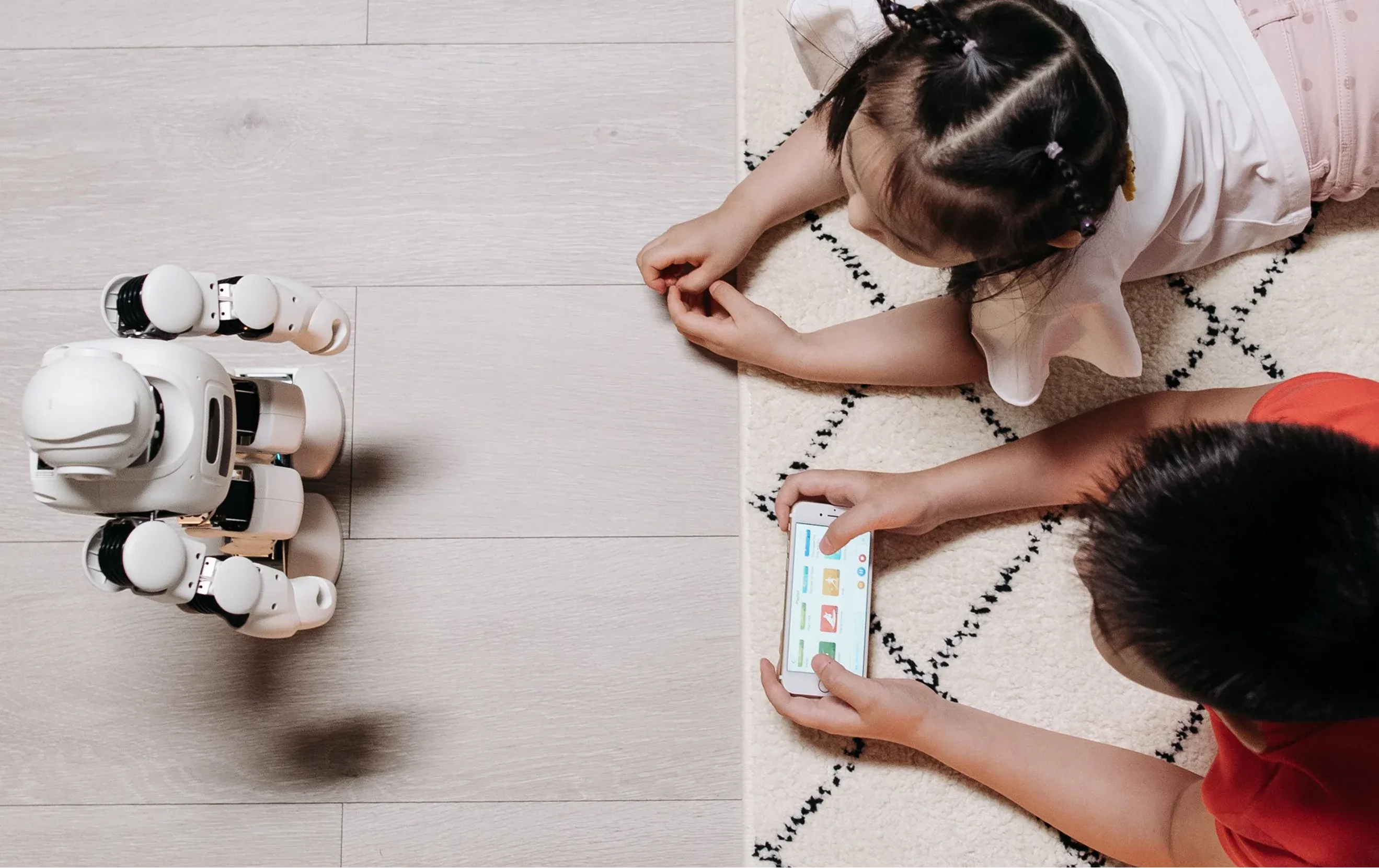
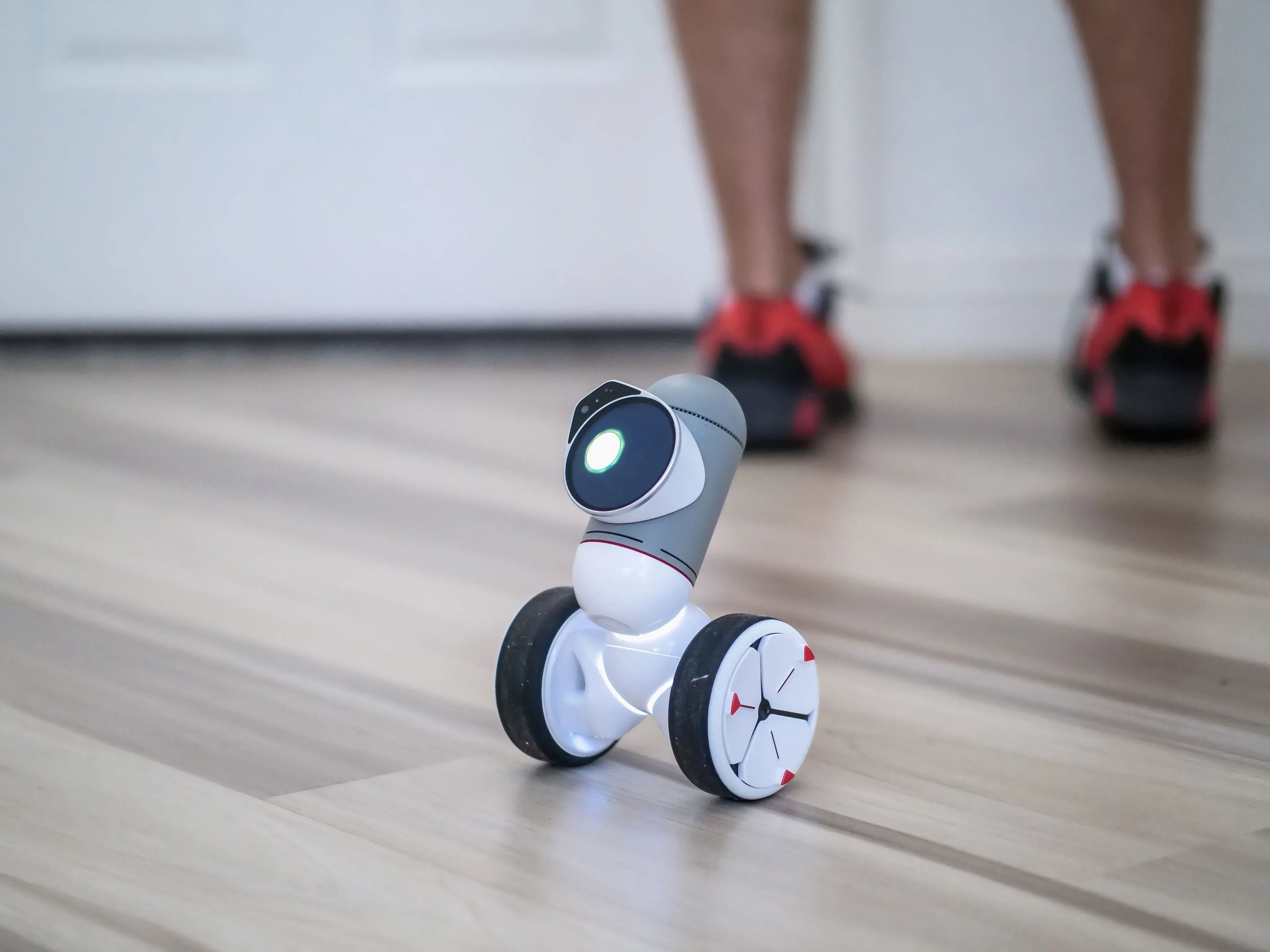
Two toys sit on a shelf in a toy store. One has five pre-recorded phrases it plays when you press its paw, the same lines every time, whether the child's paying attention or halfway across the room. The other listens. It's an AI toy that responds to whatever the child actually says to it. Neither has a screen. Only one of them behaves the way the research below says matters.
That's the distinction "screen-free" tends to erase. The label describes what a product doesn't have, not what it does, and like most shorthand, it skips the part actually worth caring about. This piece is about passive media versus interactive media, why that split matters more than whether something has a display, and a study on toddlers learning made-up words that shows exactly where the line sits.
What Does “Screen-Free” Actually Mean?
That line has nothing to do with hardware. What determines how much a child learns from something isn't whether it has a screen; it's whether the experience is passive, running the same way no matter what the child does, or interactive, changing based on the child's specific actions. Plenty of screens are passive. Plenty of screen-free things are too.
Two Kinds of Media, and Why the Split Isn't About Hardware
Passive media runs on its own script, a wind-up music box, an audiobook, a video on autoplay; none of them care what the child does. Clap, ask a question, walk out of the room; the experience keeps going exactly the same.
Interactive media works the opposite way: it depends on the child's input to decide what happens next. A parent pausing mid-story to ask "what do you think happens next?" A toy that asks a question and waits for an answer. A video call with a grandparent on a screen, sure, but the person on the other end is responding to the kid in real time.
Line those up, and the pattern's obvious: interactivity lives in the exchange, not the object. A live video call and a looping cartoon are both "screen time" on paper, but they're not doing the same thing to a kid's brain, which is part of why video calls with family tend to get treated separately from other screen time, even for infants. Someone on the other end is actually responding, not playing on a loop. A screen-free toy stuck cycling through the same five recorded lines is closer to that looping cartoon than to the video call. Passive doesn't need a screen to be passive.
The Objection: "Isn't an AI Toy Just Another Screen in Disguise?"
Which raises the obvious pushback: doesn't an AI toy just swap one kind of screen for another? It has a microphone, a speaker, a processor, usually an internet connection. That's real technology. So what actually separates it from a screen, if the whole concern is kids being overexposed to devices?
Not the hardware. The category of media it falls into. AI toys listen to what a kid says and respond to that specific input, same mechanism as the video call, minus the display. That said, dropping the screen doesn't automatically make something educational either, plenty of toys existed for a hundred years with no screen and taught nothing. What moves the needle is whether the thing responds to the kid in front of it, or just runs its program regardless.
What Does the Research Say?
That's a claim worth testing, not just asserting, and a well-known study did exactly that. Researchers taught toddlers a set of invented verbs, words with no prior meaning, so any learning could be traced back to the study itself. Kids were split three ways: one group learned from a person live in the room, a second through a live video chat where the person could see and respond to them in real time, and a third watched a recording of an earlier session, same words, same tone, that looked interactive but couldn't actually respond to the child watching it.
The live in-person group and the live video-chat group both learned the words. The recording group, despite watching nearly identical material, mostly didn't. Looking interactive and being interactive turned out to be two different things, the responsiveness had to be real, and specific to that child, for any of it to stick.
A live video chat is technically a screen, and it produced the same result as sitting in the room with someone. The recording, technically the same content, didn't. Screens weren't the disqualifying factor here. The one-way delivery was.
A Practical Way to Tell the Difference
Which gives you a simple way to spot one-way delivery in anything, screen or not: would it act any different if the child got up and left partway through? A passive toy keeps going, unbothered. An interactive one goes quiet or stalls out, not because it notices the kid left, but because there's nothing left to respond to. Its behavior was tied to the child's input the whole time, faster gut check than reading a spec sheet for whether something technically has a display.
Conclusion
Which is really the whole point here: "screen-free" tells you what a product doesn't have. It says nothing about what the product actually does. Plenty of toys with screens teach nothing, and plenty without one teach even less. What matters is whether the thing responds to your kid, specifically, or just runs the same way no matter who's in the room.
Sources:
Title: "Skype me! Socially contingent interactions help toddlers learn language"
Authors: Sarah Roseberry, Kathy Hirsh-Pasek, Roberta M. Golinkoff
Source: Child Development, Vol. 85, No. 3, pp. 956–970, published 2014
Institution: Department of Psychology, Temple University (Philadelphia, PA); School of Education, University of Delaware (Newark, DE)
Title: "The effect of social engagement on 24-month-olds' imitation from live and televised models"
Authors: Mark Nielsen, Gabrielle Simcock, Lauren Jenkins
Source: Developmental Science, Vol. 11, No. 5, pp. 722–731, published September 2008
DOI: https://doi.org/10.1111/j.1467-7687.2008.00722.x Institution: School of Psychology, University of Queensland (Brisbane, Australia) Note: Covered in full in the video deficit effect article, referenced here only for the same responsiveness finding.