Voice-First Play: Why Kids Learn Best From Things That Talk Back
By Curio Team
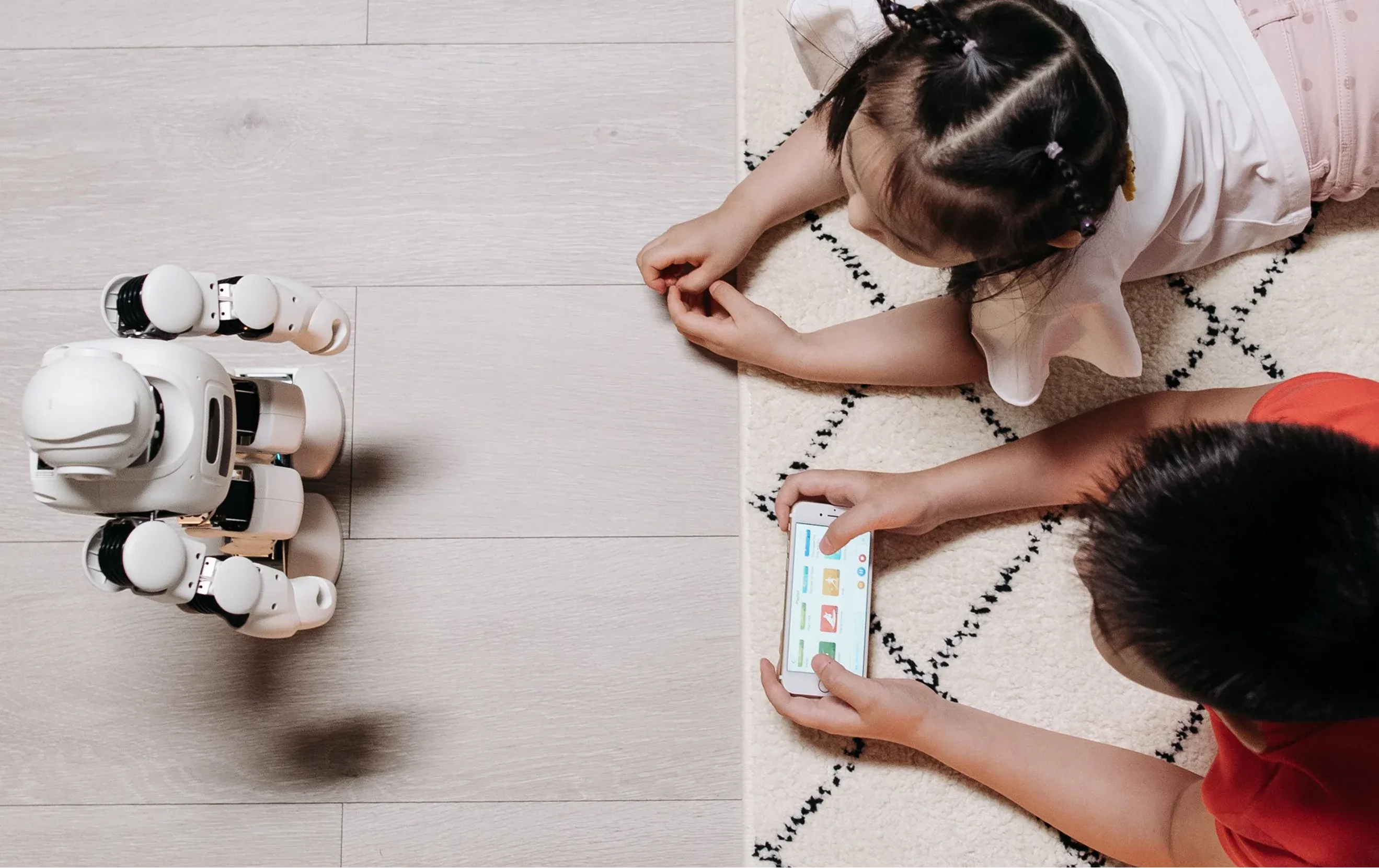
Toys have been talking for years, but what does it actually mean for a toy to talk back, rather than just talk? Both get marketed as "interactive," but only one of them is interactive in a way that means anything developmentally. A toy that cycles through the same handful of quips at the press of a button runs out of road fast, the phrases don't change no matter what the child does. Some parents already choose screen-free toys for that exact reason, avoiding overexposure to devices, and that's a solid instinct on its own. But screen-free and responsive aren't the same thing, and this piece is about the second one specifically: what actually changes, mechanically, when a toy talks with a child instead of at them.
What Is Turn-Taking, and Why Is It Different From "Talking"?
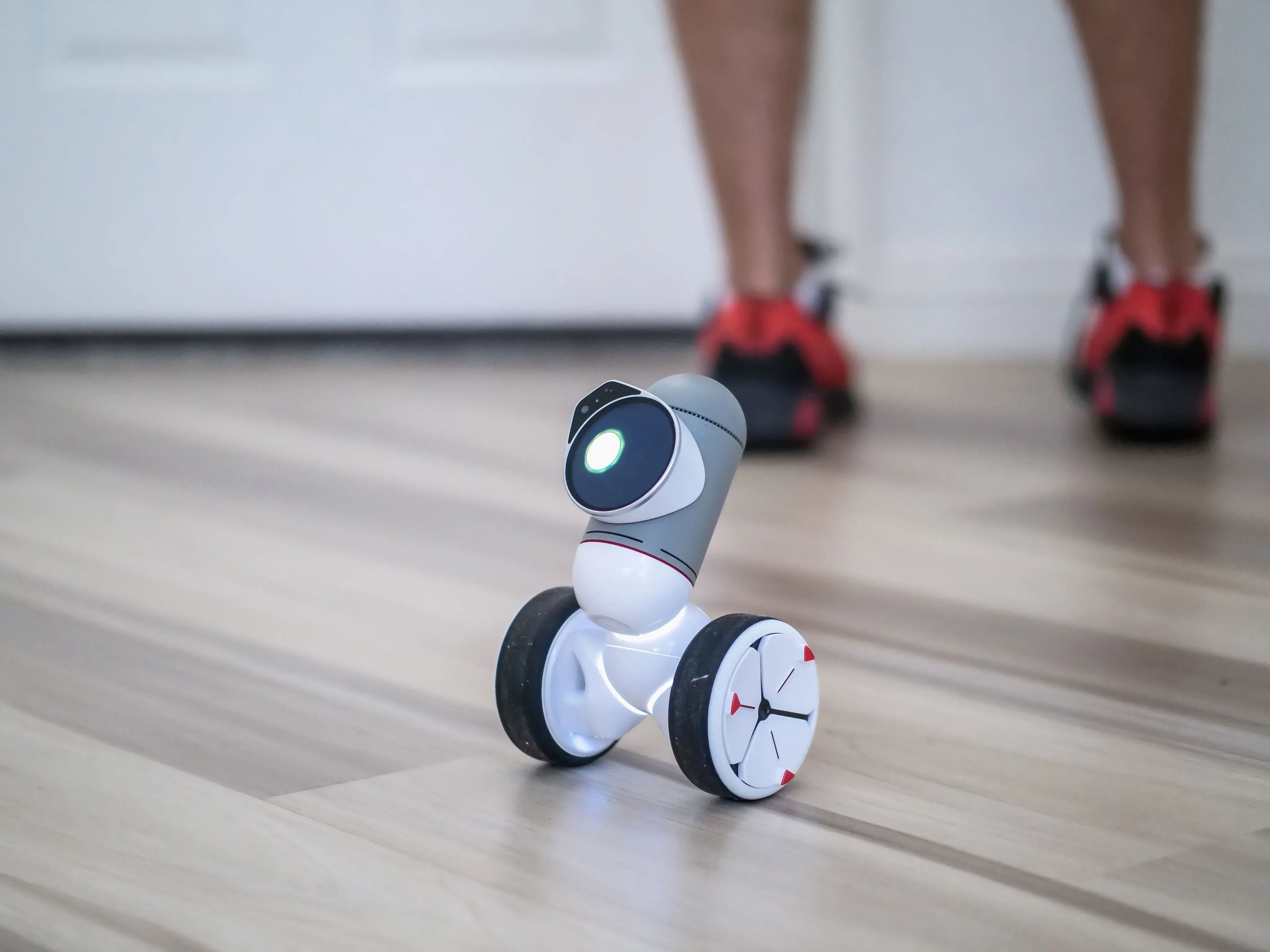
Turn-taking, in developmental terms, is an exchange where each side's next move depends on what the other side just did, not simply an alternating pattern of noise. A toy stuck on a fixed script gets boring fast, and the child isn't really taking turns with it, it's one-way: the child presses a button, the toy talks, and nothing about it changes based on anything the child does. An AI toy, by contrast, asks a question, pauses, actually processes the answer, and responds with something specific to that answer. That's genuinely reactionary, not just alternating noise.
The Theory: Joint Attention and Pacing
A 1978 experiment made a striking discovery about how a child reacts when someone they're interacting with suddenly stops responding. Researchers had mothers sit with their infants and interact normally with them at first, then instructed the mothers to hold what's called a "still face," a blank expression, no talking, no reacting, while continuing to face their child. Infants who'd been babbling and reaching toward their mom moments earlier became visibly distressed almost immediately.
The infants wanted the responsiveness back, so they repeatedly tried to restore it, smiling harder, reaching out, vocalizing. When nothing worked, they gave up and turned away. Their mothers were still right there the entire time, physically present, making eye contact. It was only when the responsiveness disappeared that the interaction fell apart for the child.
This experiment is an amplified example, but it shows clearly what happens when joint attention breaks. Even infants expect a back-and-forth exchange from anyone they're interacting with, a stranger, a grandparent, a sibling, responsiveness is something children look for instinctively. There's a second piece to this too: young children process information more slowly than adults do, so when an adult moves through an explanation faster than the child can keep up with, the child can perceive that as a form of unresponsiveness as well. A toy that waits to hear a response back hands the pacing almost entirely to the child.
What Does the Research Say About Conversational Turns?
A separate 2018 study looked at how many back-and-forth exchanges a child had with a parent in a day, not how many total words the child heard. Researchers from MIT and Harvard sent families home with audio recorders for nearly two full days and counted exactly that. Kids with more back-and-forth turns showed stronger brain activity in Broca's area, the brain's language-processing region, during a language task, and that brain activity predicted how strong their language skills actually were. Total word count didn't predict any of it, only the number of exchanges did.
This study mattered because it pushed directly against an older idea called the "30-million-word gap," which assumed vocabulary exposure alone was driving differences in children's language and academic outcomes. What the study actually showed was that the number of words wasn't the deciding factor, the number of turns was. And it held up across families regardless of income or education level, which is usually where effects like this fall apart.
This isn't a one-off finding either. A study we covered in our interactive vs. passive media article found the same shape with toddlers learning brand-new words: children learned just as well from a live video chat as from an in-person conversation, but mostly failed to learn from an identical session that was simply recorded. That adds to the pile of evidence for why responsiveness matters so much to a child's development.
A separate study on toddler imitation found the same pattern again. Children shown a live demonstration of how to retrieve a toy from a container imitated the action significantly more often than children who watched a recording of the identical demonstration. It wasn't until researchers gave the recording the ability to respond to the child in real time that performance caught back up to the live group. That finding is part of what originally fueled the "video deficit effect," where researchers initially assumed screens themselves were the reason children couldn't learn from them. They weren't, responsiveness was.
Three different research teams, three different studies, all pointing back to the same idea: responsiveness, not exposure, is the mechanism that actually drives learning in a child's brain.
What Does This Look Like in a Toy?
There's an easy way to test any toy for this, borrowed straight from the still-face logic above: does the toy's "face" ever go blank? A few things to look for:
- It pauses and actually waits, instead of talking over the kid or running out the clock on a timer.
- Its next line depends on what the kid specifically said, not just whether they said anything at all.
- It can ask a real follow-up, not just advance to whatever's next in the script.
- The pacing feels set by the exchange, not rushed to hit a runtime.
None of this has been tested directly on AI toys as a category, but the research above points to the right ingredients: a toy built this way creates a system where its behavior is genuinely tied to whether the child talks and how they respond, something a fixed-script toy simply can't replicate.
Conclusion/TL:DR
Withhold responsiveness enough, and a child will literally turn away from you, that's not a figure of speech, it's what happened in the study. The still-face experiment is an extreme version of it, a parent physically present but not allowed to talk or react, and that alone was enough to visibly distress the child. It's a blunt lesson, but a clear one: children need attention that talks back to actually grow from it.
Sources:
Title: "Beyond the 30-Million-Word Gap: Children's Conversational Exposure Is Associated With Language-Related Brain Function"
Authors: Rachel R. Romeo, Julia A. Leonard, Sydney T. Robinson, Martin R. West, Allyson P. Mackey, Meredith L. Rowe, John D. E. Gabrieli
Source: Psychological Science, Vol. 29, No. 5, pp. 700–710, published online February 14, 2018
DOI: https://doi.org/10.1177/0956797617742725 Institution: McGovern Institute for Brain Research, Massachusetts Institute of Technology (Cambridge, MA); Harvard Graduate School of Education, Harvard University (Cambridge, MA)
Title: "The Infant's Response to Entrapment Between Contradictory Messages in Face-to-Face Interaction"
Authors: Edward Tronick, Heidelise Als, Lauren Adamson, Susan Wise, T. Berry Brazelton
Source: Journal of the American Academy of Child Psychiatry, Vol. 17, No. 1, pp. 1–13, published 1978
DOI: https://doi.org/10.1016/S0002-7138(09)62273-1 Institution: Child Development Unit, Children's Hospital Medical Center (Boston, MA)
See also: Roseberry, S., Hirsh-Pasek, K., & Golinkoff, R. M. (2014). "Skype me! Socially contingent interactions help toddlers learn language." Child Development, 85(3), 956–970. Covered in full in our interactive vs. passive media article.
See also: Nielsen, M., Simcock, G., & Jenkins, L. (2008). "The effect of social engagement on 24-month-olds' imitation from live and televised models." Developmental Science, 11(5), 722–731. Covered in full in our video deficit effect article.