The Video Deficit Effect: Why Kids Learn Less From Screens Than From Real Interactions
By Curio Team
A toddler watches an adult hide a toy, once in person and once on a video of the exact same moment. Then you ask that toddler to go find the toy. The one who watched it happen live is able to find the toy, but the toddler who watched the same thing happen on video usually can't. The toy was hidden in the same spot, and the same information was conveyed either way; the only thing that was different was the format itself.
That gap has a name in developmental psychology: the video deficit effect, and it's one of the most replicated findings in early childhood media research. It shows up far beyond simple hide-and-seek tasks; it also shows up in language learning, imitation, and real-world problem-solving. It's one of the key pieces of research behind why "screen time" and "learning" aren't automatically the same thing for a young child, even if it's just one piece of a much larger body of research on kids and screens. This blog is going to go deep into what the effect actually is and the studies behind it. We'll also be talking about why researchers now think screens themselves aren't the issue; responsiveness is the real cause.
What Is the Video Deficit Effect?
The video deficit effect is a finding that shows young children, particularly those under age three, learn significantly less from a video demonstration than from the same demonstration shown to them live. The gap shows up across tasks like object retrieval, word learning, and imitation. Researchers attribute this to the video's inability to respond to the child in real time, not to screens being inherently harmful, something we'll expand on further below.
That hide-and-seek scenario is the classic version of this effect, an object-retrieval task where the only variable that changes is whether the demonstration was live or recorded. The gap it produces seems to be largest before age two, narrows somewhat around age three, and mostly closes by preschool age. Many researchers treat it as a developmental pattern tied to how young the child is, not a fixed rule about screens and learning in general.
The video deficit effect isn't limited to finding hidden objects. Some of the studies covered below test entirely different skills, including language learning and physical imitation, and land on the same basic pattern. Some of the studies covered below test completely different skills, including language and imitation. Researchers have also started using a broader term for the pattern, the "transfer deficit," since the issue isn't really about screens themselves. It's better understood as young children struggling to transfer what they learn in a two-dimensional space into a three-dimensional one.
The Theory Behind It
The leading explanation points to a problem that isn't about screens; it's about the one-way communication a child gets while watching. The kid ends up more of a spectator than a participant. A recorded model can't respond to the child at all; it plays out the same way no matter what happens in the room, while a live demonstration can actually change depending on what the child does, which is what makes it more effective. A live demonstrator or teacher can help a child who gets something wrong, notice if they're stuck, or expand on what the child said. Researchers call this a break in "social contingency," the back-and-forth responsiveness that makes an interaction more engaging and, ultimately, more useful for learning.
This connects to a larger idea in developmental psychology called joint attention. When two people are focused on the same thing, they'll often look back at each other, checking in about it together. Joint attention is considered one of the main ways children build language and understanding, but it requires another party to actually be there and respond.
Researcher Rachel Barr's 2010 review reframed the video deficit as a transfer-of-learning problem, arguing that the deficit isn't unique to TV or video. It's a broader challenge young children face when trying to move information from a 2D world into a 3D one. Under that framing, calling it a "video" deficit is a little misleading, since the screen itself isn't really the problem. Screens are just a common way children run into this 2D-to-3D transfer problem.
What Does the Research Say?
The Mandarin Language Study
One of the clearest demonstrations of the video deficit effect comes from a 2003 study on nine-month-old American infants who had never been exposed to Mandarin Chinese. Researchers split the infants into groups and exposed them to Mandarin speech sounds over a series of sessions across several weeks. One group of infants sat with a live Mandarin-speaking tutor who read to them and played with toys while talking. Other groups were exposed to the exact same material, but through an audio recording or a video recording of the tutor's sessions instead.
By the end of the study, the infants who had sessions with a live tutor showed a real ability to distinguish Mandarin phonetic sounds they hadn't been able to distinguish before. The infants in the audio-only and video-only groups showed no improvement at all, performing no differently than infants who received no exposure whatsoever. The content the infants heard was identical across every group; the only thing that differed was whether a live, responsive person was in the room with them.
The Imitation Study
A separate study looked at 24-month-olds and tested imitation instead of language. The researchers ran two experiments. In the first, children were shown a demonstration of a specific way to retrieve a toy from a container, either by a live person or by a video recording of that same demonstration. Children in the live group performed the correct action significantly more often than the children who watched the recording.
Probably the most interesting part of the whole study is the second experiment, where researchers changed just one thing. Instead of a passive recording, children watched a person on a closed-circuit video feed who could actually see the child and respond to them in real time, essentially a live video call rather than a static recording.
Children in that responsive video-feed condition imitated the task just as well as the children who got a fully in-person demonstration. Put next to Experiment 1, where children watching a static recording imitated significantly less than the live group, the pattern is clear: adding real-time responsiveness closed nearly the entire gap that the passive recording couldn't. This really drives home the point that the video deficit depends heavily on the responsiveness of the interaction, not just the quality of the content itself.
Is The Video Deficit Going Away?
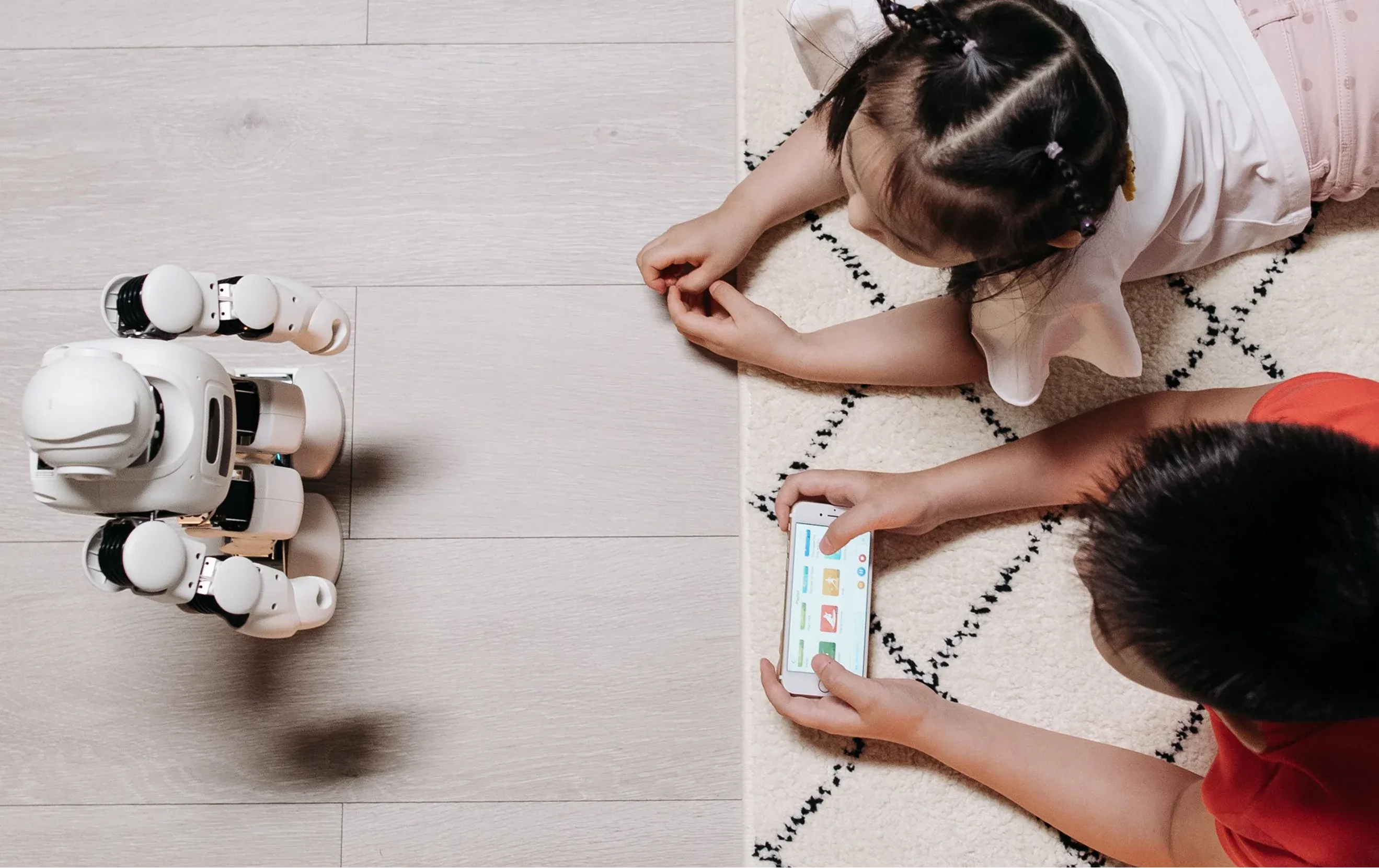
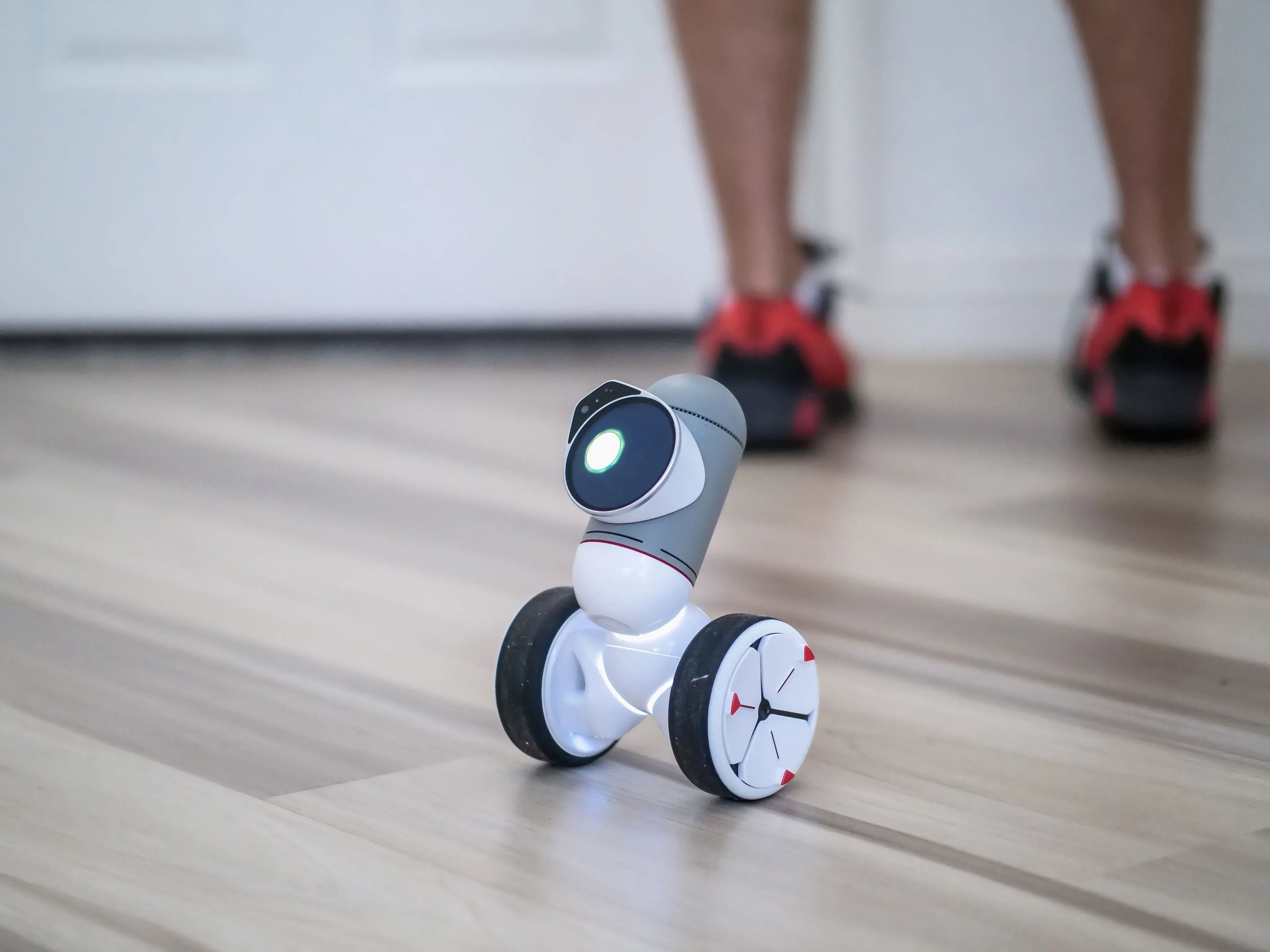
It's worth being upfront that this isn't entirely settled science; there's real debate over whether the video deficit is still as strong as it used to be. Part of the reason some researchers think it may be fading is that newer studies are finding a smaller effect than older ones did. One recent study using a social robot found no video deficit at all in two-year-olds, a notable result for anyone treating the effect as a given. Researchers have started theorizing that this could be because children growing up surrounded by interactive technology find video and screens more "meaningful" than children did 20 years ago, which could change how they process what they see on one.
Still, one study isn't the same as a body of research, so this doesn't erase the effect outright; it just means the finding is less settled than it used to be. The broader consensus still leans toward some version of the video deficit holding, particularly for younger children, just possibly a smaller version of it than the early studies found.
Conclusion
The video deficit effect was never really a story about screens being bad for kids. It's a story about one-way information being harder for a young brain to process than a two-way exchange. The Mandarin study and the imitation study both point to the same conclusion from different angles: give a child something that can respond to them, and a lot of the deficit disappears, whether that something is a live person or a person on a video call. One newer study suggests a responsive robot might produce the same result, but that's a single, preliminary finding, not yet the kind of consensus the studies above have behind them.
That reframes the real question worth asking about any technology a child interacts with. It's not whether it has a screen, and it's not even the content; it's whether the tool actually responds to the specific child using it, or does the same thing regardless of whether the child is even there. That distinction is what nearly every study here points to, and it's worth noting the same logic applies to screen-free technology too; being screenless isn't enough on its own; it still has to be genuinely responsive.
Sources:
Title: "Foreign-language experience in infancy: Effects of short-term exposure and social interaction on phonetic learning" Authors: Patricia K. Kuhl, Feng-Ming Tsao, Huei-Mei Liu Source: Proceedings of the National Academy of Sciences (PNAS), Vol. 100, No. 15, pp. 9096–9101, published July 22, 2003 DOI: https://doi.org/10.1073/pnas.1532872100 Institution: Center for Mind, Brain, and Learning, University of Washington (Seattle, WA)
Title: "The effect of social engagement on 24-month-olds' imitation from live and televised models" Authors: Mark Nielsen, Gabrielle Simcock, Lauren Jenkins Source: Developmental Science, Vol. 11, No. 5, pp. 722–731, published September 2008 DOI: https://doi.org/10.1111/j.1467-7687.2008.00722.x Institution: School of Psychology, University of Queensland (Brisbane, Australia)
Title: "Transfer of learning between 2D and 3D sources during infancy: Informing theory and practice" Authors: Rachel Barr Source: Developmental Review, Vol. 30, No. 2, pp. 128–154, published June 2010 DOI: https://doi.org/10.1016/j.dr.2010.03.001 Institution: Department of Psychology, Georgetown University (Washington, DC)
Title: "Television and very young children" Authors: Daniel R. Anderson, Tiffany A. Pempek Source: American Behavioral Scientist, Vol. 48, No. 5, pp. 505–522, published 2005 Institution: Department of Psychological and Brain Sciences, University of Massachusetts Amherst (Amherst, MA)