How AI Toys Support Learning & Development
By Curio Team
When a parent is looking to buy an AI toy, they almost all ask themselves the same question. Is this toy actually helping my kid learn, or is it just an expensive distraction? For a long time AI toys were mostly an interesting gimmick, but times are changing and AI toys are actually becoming useful.
Over the last several years, researchers from many different countries have been studying the effects on children who interact with AI on a consistent basis. All of their findings are pointing in one direction. Children who interact with AI in a meaningful way show positive results across language, memory, attention, curiosity and academic subjects like science and math. These studies were not conducted by AI toy companies, they were conducted by independent academics.
This article looks at some of the research that has come out recently on AI and its effects on children's development.
Effects on Language Development
Language is one of the most critical skills in early childhood. It develops primarily through repeated practice and use of speaking, but can AI toys help further this skill?
A 2025 systematic review of 33 independent studies consistently found positive language development when children interacted with AI toys regularly. Vocabulary increased because children were pushed to use words in actual context instead of just memorizing them. This is exactly how children learn words, through exposure and back and forth conversation.
The other skill that improved was speech. Speaking confidence grew because AI provides a low stakes environment compared to talking to a parent or a teacher.
The most significant part of this study is that the technology used across all 33 studies was 2 to 4 years old at the time. The AI tools and toys available today are much more advanced, which could only amplify the results of this review.
Read More: How AI Toys Can Help Kids Learn
What Does Storytelling Have to Do With Development?
The research makes it clear that conversation is the engine behind language growth, and one of the oldest and most natural forms of conversation between a parent and child has always been storytelling.
Being read to as a child is one of the most important activities of your entire life. It builds language, strengthens memory, develops early literacy and creates the kind of curiosity that leads to deeper learning. Although never a replacement for a good parent, AI toys are starting to change how storytelling works. AI toys are capable of open-ended storytelling, where the story is directed partly by the child through back and forth conversation, similar to how a parent would tell a story.
One of the biggest advantages AI toys have is their availability. Every parent knows that life can sometimes get in the way of time with their child, so why not keep the time apart actually engaging? AI storytelling also offers a low stakes environment that makes children open up more, similar to what was found in the language development research above. It does have its drawbacks however. Stories often hold emotional nuance and culture, which AI is incapable of fully understanding and portraying.
Read More: How AI Storytelling Toys Are Changing the Way Kids Learn
Do AI Toys Improve Memory and Attention?
Storytelling does more than entertain. The act of following a narrative, holding details from earlier in the story and making sense of what comes next is one of the earliest exercises in memory a child experiences. So can AI toys actively improve how children remember and pay attention?
The study Agnes and Srinivasan (2024), World Journal of English Language, questioned whether AI could assist in memory retention, and it was primarily focused on students learning English as a second language.
The study consisted of 60 undergraduate ESL learners split into two groups of 30. One group used a mnemonic method combining Anki flashcards with AI-generated phonetic keywords, and the other used standard Anki flashcards with no mnemonics. They measured outcomes using a vocabulary test, the same one given before the studying began.
The results showed that studying works, and that both groups significantly improved their scores. What makes it interesting is that the AI group scored higher than the control group, with post-test scores of around 41.93 versus 38.47. Although it may seem like a slight increase, it is a good sign for AI being used alongside education.
What does this mean for AI toys exactly? AI toys are a different case considering the participants were adults, not AI toys' target demographic. In reality the evidence supporting AI toys improving actual child memory is still limited. This is primarily because AI itself is so new, and AI toys even newer. Expect many more studies in the coming years.
Read More: Do AI Toys Improve Memory and Attention in Children?
Can an AI Toy Make My Child More Curious?
Memory and attention are foundational skills, but they are most powerful when paired with something that drives a child to use them in the first place. That something is curiosity. And it turns out curiosity may be more teachable than most people think.
A study back in 2015 by MIT researchers asked the question, can AI make a child more curious? This is a great question because curiosity is what drives a child to explore and want to learn about their world.
The study broke results into two measurable categories, curiosity and learning gains. Their curious robot showed increased curiosity and free exploration, which was what they were looking for. But what they found next surprised the researchers. The non-curious robot actually had significantly better learning gains than the curious robot.
They hypothesized this was because the curious robot would often lead a child away from a path of learning in order to provoke more curiosity. The authors suggested this could be a possible drawback to curiosity based learning over a short time period. The study consisted of around 48 children who each had only 15 minutes with the toy.
So in short, yes, the 2015 study was actually able to make children more curious using an AI toy.
Read More: Can AI Toys Encourage Curiosity and Independent Thinking?
How AI Toys Can Make STEM More Fun for Kids
A curious child does not just explore for the sake of it. They start asking bigger questions about how things work, why things happen and what they can build or create. That is exactly where STEM comes in.
AI STEM toys prioritize real time feedback and immediate outcomes, which makes children feel like they are actually in charge of the results instead of just waiting. Another big advantage AI STEM toys have over regular STEM toys is adaptive difficulty. Most AI toys include some type of personalization that controls the type of questions or missions a child gets. This keeps learning at the perfect level, just challenging enough to stay interesting and not hard enough to create frustration.
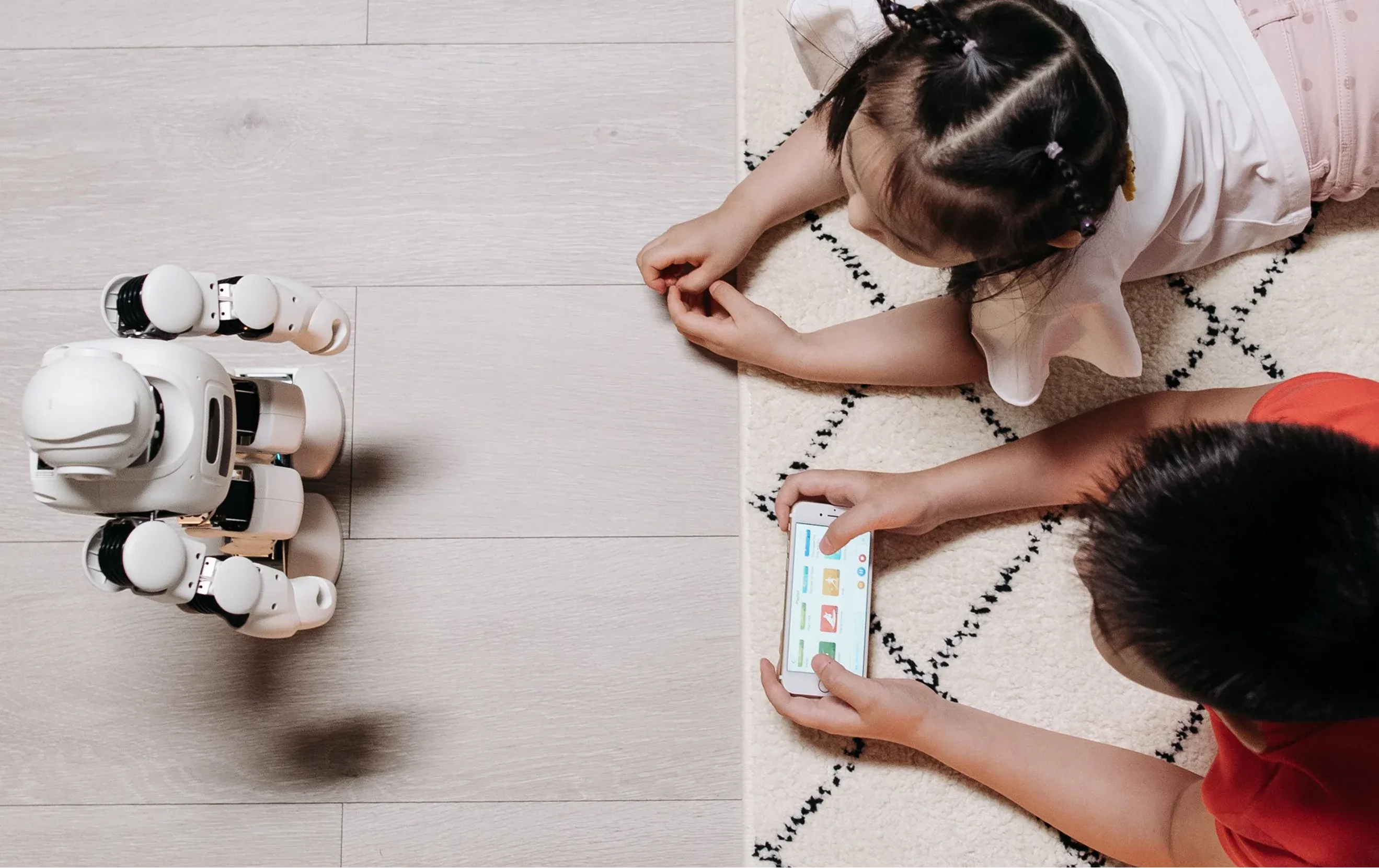
AI toys are viewed by children as companions and friends, which gives them unique advantages compared to a teacher or a parent. Children feel more comfortable engaging with an AI, which reframes learning as playing, and that is massive for enjoyment.
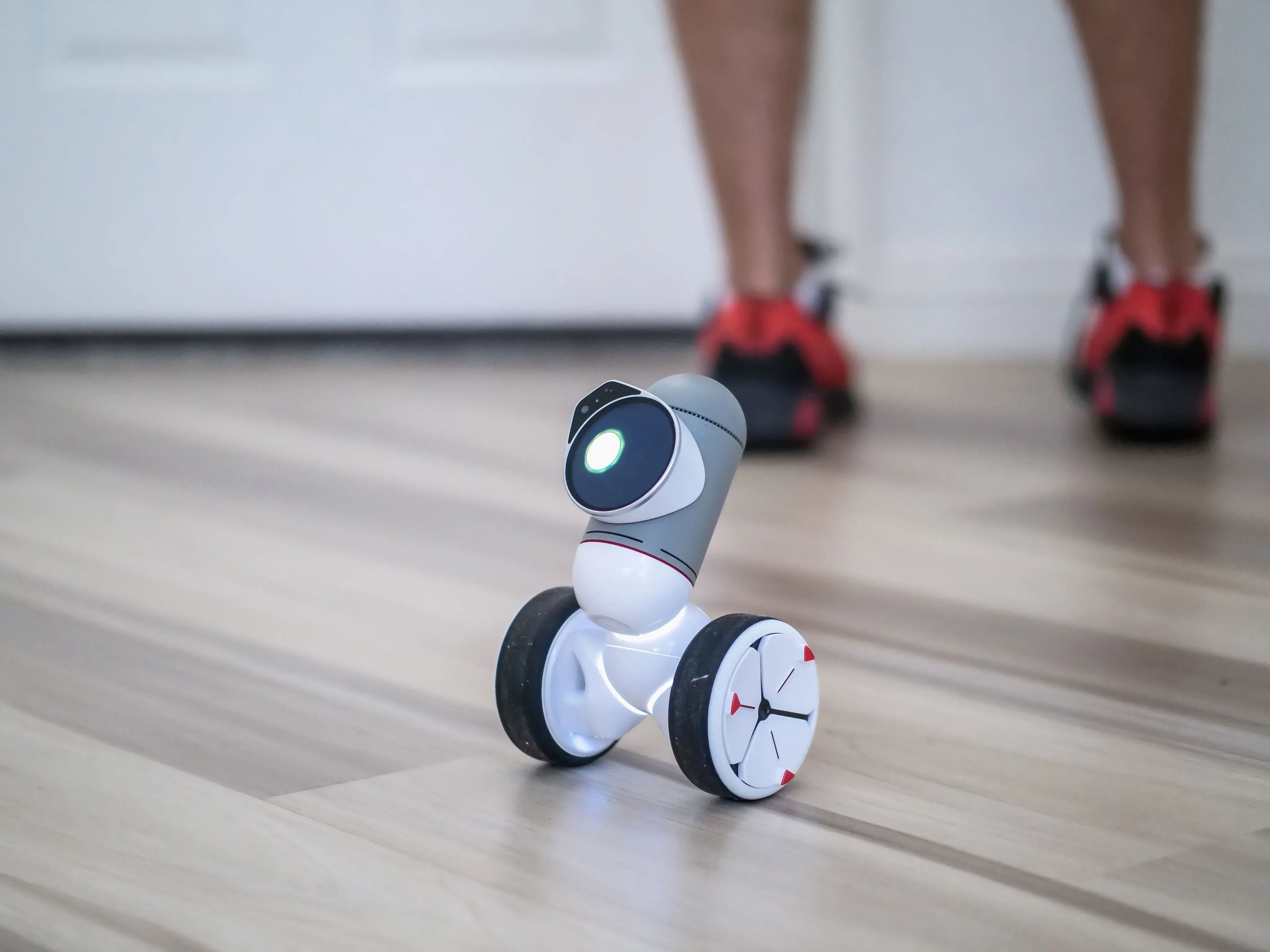
Two smaller benefits that AI STEM toys offer are hands-on interaction and gamification. The physical aspect of AI toys helps with spatial reasoning and problem solving. Coding robots that move depending on what you program them to do are a great example of this, building a natural understanding of cause and effect through play.
Read More: How AI Toys Are Making STEM Fun for Kids
Conclusion
Across language, storytelling, memory, curiosity and STEM, the pattern is consistent. AI toys are not just keeping children entertained, they are quietly building the skills that matter most.
The evidence in this article comes from all different parts of the world, conducted independently without funding from AI toy companies, and it all points in one direction. AI has proven itself to be beneficial to education and development, and this is expected to extend to AI toys as the research catches up.
This does not mean AI will replace what matters most. Parents, educators and grandparents are all invaluable to a child's development. Humans are what drive culture and true learning. AI is here to make that a little easier, meant to fill the gaps when life gets in the way. AI toys are not just a gift, they are an investment in how your child thinks, learns and grows.
Sources:
- Title: "A Systematic Review of the Recent Research on the Usefulness of Chatbots for Language Education". Authors: Şahin Kızıl, A., Klimova, B., Pikhart, M. and Parmaxi, A. Source: Journal of Computer Assisted Learning, 41(2), 2025. Link: https://onlinelibrary.wiley.com/doi/10.1111/jcal.70001
- Title: "Can Children Catch Curiosity from a Social Robot?". Authors: Goren Gordon, Cynthia Breazeal, Susan Engel. Source: HRI '15 — Proceedings of the 10th Annual ACM/IEEE International Conference on Human-Robot Interaction, Portland, Oregon, March 2–5, 2015. DOI: http://dx.doi.org/10.1145/2696454.2696469. Institution: MIT Media Lab (Personal Robots Group) and Williams College (Department of Psychology)
- Title: "The Role of AI-Generated Mnemonics in Vocabulary Retention". Authors: Agnes, R. and Srinivasan, K. Source: World Journal of English Language, 14(6), 2024. Link: https://wjel.sciedupress.com