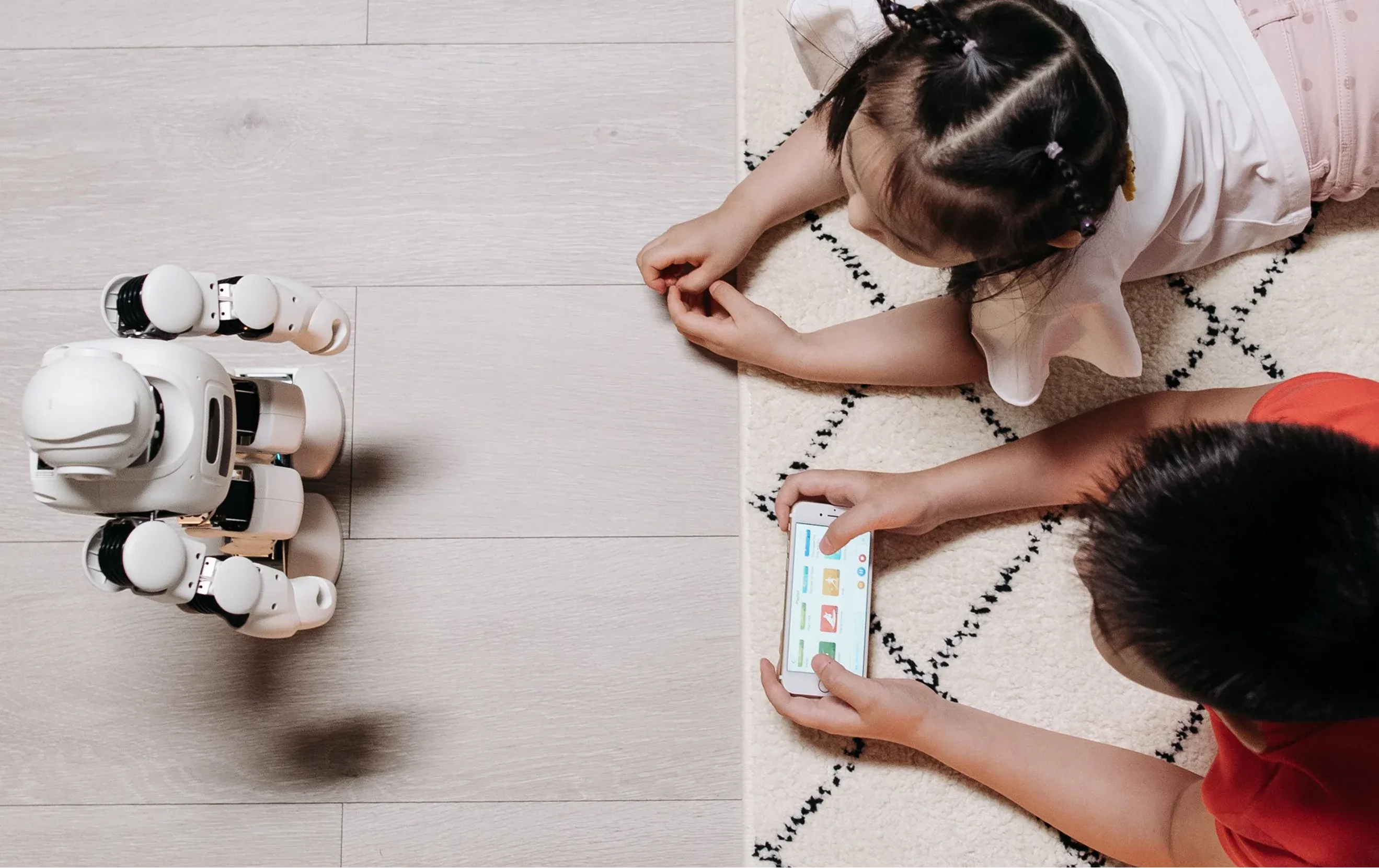
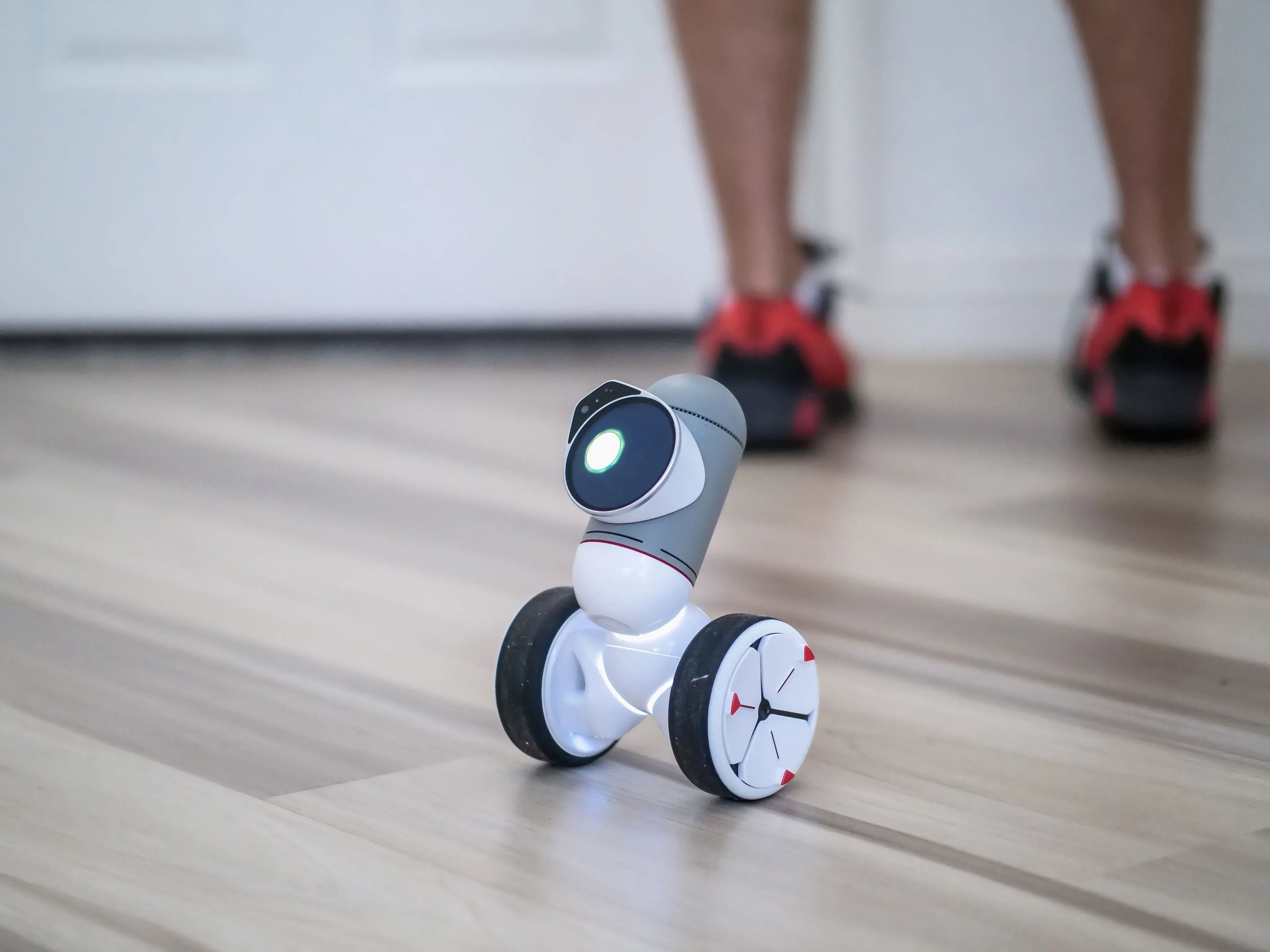
Can AI Toys Encourage Curiosity and Independent Thinking?
By Curio Team
Think back to when you were a child, in your first moments in school or somewhere you were probably genuinely curious about a situation and wanted to know more. That's exactly where we want kids' headspace to be, curiosity fuels the drive to learn and grow. But what if we could make children more curious? A few researchers at MIT decided to see if they could use an AI robot to do exactly that.
What is "Curiosity" Exactly?
Before going into the study, it may be important to ask, what is curiosity, and how can we measure it?
In the simplest terms, the Cambridge Dictionary defines it as "an eager wish to know or learn about something." So what does this mean for education? How can you make a child more eager to learn? Children are often a product of their environment, if you grew up in a baseball household, you most likely played baseball as a kid. It's the same for a learning environment, a child's life should be full of learning opportunities. With AI toys, this curiosity comes from open-ended play by expanding on what the child is already interested in. When a kid comes to you with something they're actually interested in and eager to learn about, take that and run with it.
Kids Catching Curiosity From a Robot?
In 2015, researchers at MIT decided to see if a robot could enhance learning by making a child more curious. The setup was quite interesting and actually reflects how Curio's toys are built.
The Setup
For this experiment, they used 48 children aged around 3.4 to 8.4 years old, a number they arrived at after exclusions from an original pool of 71.
The scenario had a child sitting with a robot named "Dragonbot," presented to the child as a younger robot named "Parle" that was trying to learn to read, with the child helping it. The child was then given a tablet and asked to co-create a story with the robot's help. Once the child chose pieces to put in the story, the robot would speak the words and ask the child to point out the word it had just said.
The Three Groups
During the study, there were three different robot conditions, depending on which group you were in.
- Curious: The curious robot was programmed to say things like "I love to learn" or "I wonder what this would do." It also answered wrong guesses in a positive light.
- Non-Curious: Identical to the curious robot, except instead of positive affirmations, it responded neutrally.
- Curious Tablet: This one was interesting because it replaced the plush robot body the other conditions had with just a tablet and an autonomous voice. It still used the same curious speech as the curious robot, just with no body attached.
Results
Some very interesting data came from this experiment, and the researchers themselves were surprised. Here's what they found.
- Curiosity Measurement: The curious robot actually increased free exploration and curiosity compared to the non-curious robot. Children were also significantly more willing to choose an "unknown" option over a known one when playing with the curious robot. One interesting thing is that children didn't generate more questions between the two conditions.
- Curious Robot Vs Curious Tablet: Interestingly, the curious tablet and the curious robot produced the same amount of increased curiosity across the same measures. Another thing worth noting is that children would often point at the speakers, suggesting they thought of it more as a disembodied voice than as coming from the tablet itself.
- Learning Gains: This is the part the researchers didn't expect. All the children learned new words, but the non-curious robot actually produced slightly more learning. One suggested reason is that the curious robot may have been pulling the child's attention off task. This hints at some kind of curiosity and learning tradeoff, even though it was only a 15-minute session.
- Engagement Likability: One final interesting note is that the bodied toys, both the curious and non-curious robots, had higher engagement, while only the tablet scored lower. This suggests children liked the one-on-one, "real" engagement that a plush robot provides, which is exactly what Curio offers.
Curiosity vs Learning Tradeoff
To dig deeper into the tradeoff found in the learning gains, if curiosity is supposed to drive learning, why did the curious robot produce slightly lower scores than the plain one?
We don't know for sure, but there are a couple of possibilities. First, the curious robot may have been doing too much to spark interest in new ideas, pulling the child off track, which could explain the lower scores. Second, curiosity by its nature pulls a child's mind outward, toward new possibilities, which likely contributed to less focused learning during the session. Finally, it could simply come down to the limitations of the study itself.
Study Limitations
While it's easy to say "AI toys increase curiosity in children, this study proves it," I'd hold off on that. Beyond the fact that the study is now over 10 years old, there are a few other things worth considering before running with its results.
Sample Size
The sample size was fairly small compared to other studies, with only 48 child participants. That works out to around 13 to 17 children per group, which could easily have affected the results.
Short Session
Each session ran about 30 minutes, with only 15 spent with the actual robot. We know the robot can nudge curiosity in the moment, but we don't know if that effect actually persists. Longer sessions or follow-up testing would tell us a lot more.
Narrowly Defined Curiosity
the study measured curiosity strictly through free exploration, question generation, and uncertainty-seeking. These are all real measures of curiosity, but they aren't the same as real-world independent thinking. Curiosity is hard to measure, and it isn't a trait you can simply hand a child.
Not "True" AI
It's worth noting that the robot in this study wasn't really "AI" in the way we think of it today. It didn't generate its own responses, it ran on pre-written phrases and an algorithm that picked from a set list, not something like a large language model that can actually hold a conversation. This isn't a bad thing, it just means the study shows us something about modeled behavior and curiosity, not proof that today's more advanced AI toys will do the same thing. If anything, it makes you wonder if newer AI toys, ones that can actually respond and create in the moment, might have an even bigger effect, or maybe a completely different one.
Key Takeaway for Parents
What the study really shows is that the toy's language, not its "intelligence," affected the outcome the most. It was how the robot responded to mistakes and expressed its own curiosity that shaped how curious the child became. Interestingly, the non-curious robot actually performed better when it came to teaching new words. That's not a bad thing, it just suggests that, at least in this study, a toy built to spark curiosity and a toy built to teach content may be doing two different jobs, not one.
Conclusion
So, final answer: can AI toys encourage curiosity and creative thinking? Yes, the research shows that even an early, scripted robot was able to boost curiosity in a short amount of time. It's important to note, though, that this same curiosity didn't actually improve word-learning scores, in fact, the non-curious robot did better on that front. So maybe the takeaway is to set aside separate time for exploration and curiosity, rather than expecting one AI toy or one session to do both at once.
Source:
Title: "Can Children Catch Curiosity from a Social Robot?"
Authors: Goren Gordon, Cynthia Breazeal, Susan Engel
Source: HRI '15 — Proceedings of the 10th Annual ACM/IEEE International Conference on Human-Robot Interaction, Portland, Oregon, March 2–5, 2015
DOI: http://dx.doi.org/10.1145/2696454.2696469
Institution: MIT Media Lab (Personal Robots Group) and Williams College (Department of Psychology)
Definition of curiosity: https://dictionary.cambridge.org/us/dictionary/english/curiosity