What is an AI Toy?
By Curio Team
A robotic friend you can talk to is no longer just science fiction, in fact, they are sitting on store shelves right now. But what actually makes AI toys different from the electronic toys of the past? This article breaks it all down.
What is an AI Toy?
An AI toy is a device powered by Artificial Intelligence that is used to entertain, assist or educate a child. This can be in many different forms, whether a plush or a coding robot.
They almost all use an LLM (Large Language Model) to generate a response. What separates them from the electronic toys of the past is their ability to actually understand what a child is saying and respond in a way that feels genuinely intelligent.
How AI Toys Actually Work
Every AI toy starts with a physical body, whether that's a plush, a wheeled robot, or a robotic dog. Inside, they almost always feature a microphone and speaker, and some of the more advanced models include a camera as well.
When a child speaks to the toy, the microphone captures the audio and converts it into a transcript, which is then sent to an LLM to process. The LLM generates a response, and the toy reads it back to the child through an AI powered voice.
Different Types of AI toys
Although they share a wide variety of features, AI toys do differ depending on their designed function. Let’s dive into what makes each type of AI toy unique and see what advantages each type offers.
Smart Plushes
The increasingly popular option of AI toys is AI smart plushes. These AI toys are just like regular plushes, except they include a speaker, microphone, and a connectivity device.
This allows for them to be a conversational AI that can talk back and forth to a child. It does this by sending a transcript of what the child said, and running it through an LLM similar to ChatGPT. The result is a conversation that can be entertaining, engaging and educational.
How Do They Work?
An AI plush’s first job is to capture what a kid says to it. It then sends a transcript to an LLM through the internet (which is why wifi is needed). The AI processes the input, and generates an age-appropriate smart response.
This can allow a ton of flexibility, whether telling a highly engaging story or helping with math homework. The best products on the market personalize the experience by remembering past conversations and provide parental controls over content and curated “safe” knowledge bases.
Primary Features
- Open ended conversation: This allows for a conversational back and forth that doesn’t feel restricted. Especially important for curious children who love to ask questions.
- Storytelling: AI plushes excel in story telling, where personalization can allow for stories to center around topics the child enjoys.
- Memory and Personalization: By remembering previous conversations, it creates a sense of an ongoing relationship.
Who Are They Best For?
Most AI plushies are targeted for children of the ages of 3-10, although it can vary. Younger children in the 3-6 range can especially benefit from an AI plush. This is because conversational AI has been shown to have a positive effect on vocabulary and language skills at this age.
If you’d like to know more about the positive effects and a dive into some of the studies around this topic, we have an article (Here) you can check out. Another reason parents decide to choose AI plushes over other AI toys is, traditionally, they do not have screens. This can be especially useful for parents trying to avoid screens when it comes to play or education.
Parent Consideration
Although AI toys are an extremely useful tool, there are some things to take into consideration with these plushes. They do take a transcript of what a child says, and send it to a server on the cloud.
Parents should make sure to read the manufacturer policy when it comes to their children’s data. It's important to note that Curio holds transcripts of voice data for 90 days before being deleted, however parents can request data deletion at any time in our app.
Key Takeaway: AI toy plushes are a great option especially for curious younger kids. AI plushes have a unique advantage when it comes to education as children often feel more comfortable talking to an AI plush rather than a teacher or parent. There's a growing number of studies linking positive language benefits to AI toys. However, be sure to always check the manufacturer’s policy on how they handle your child’s data.
Coding and STEM Robots
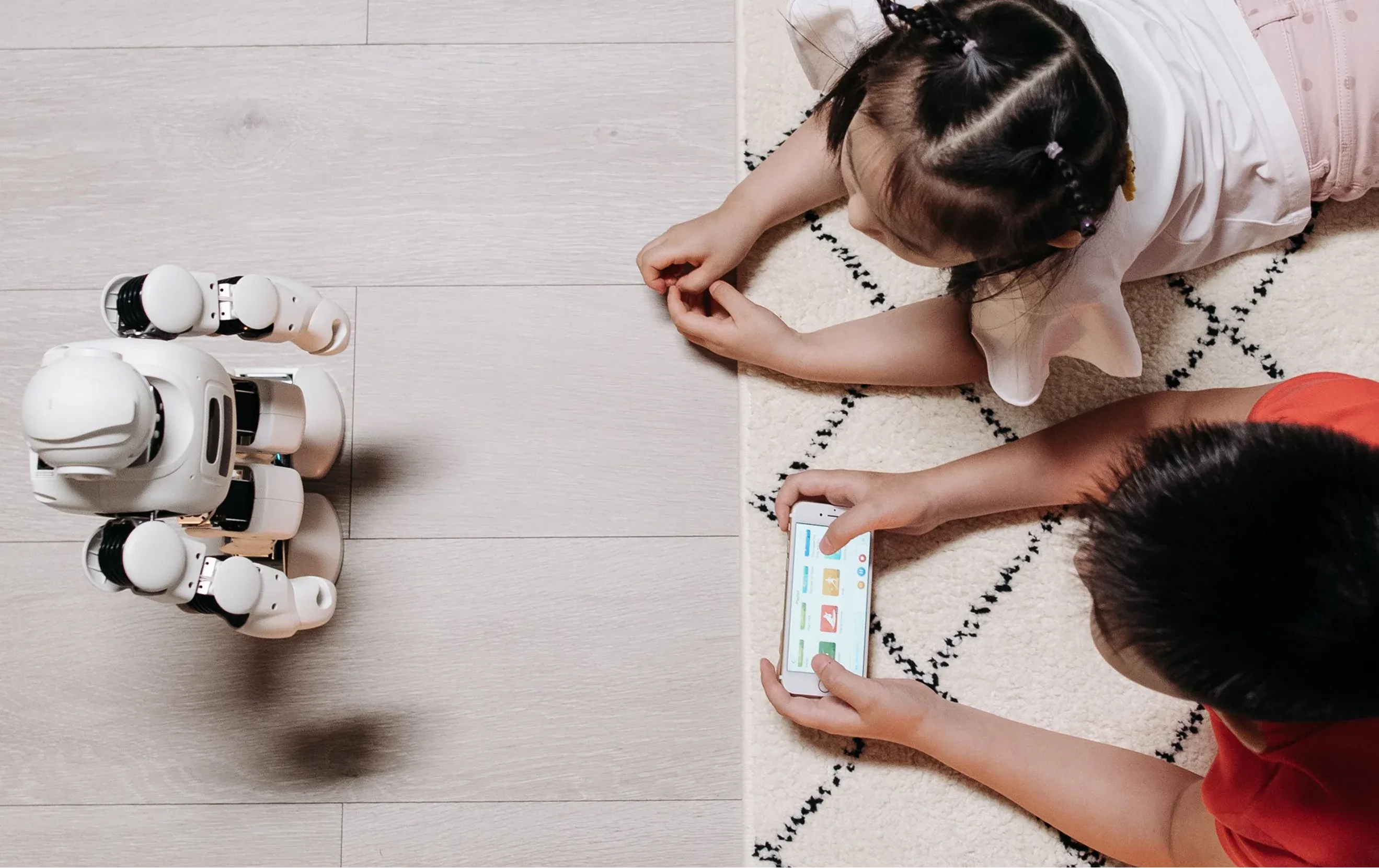
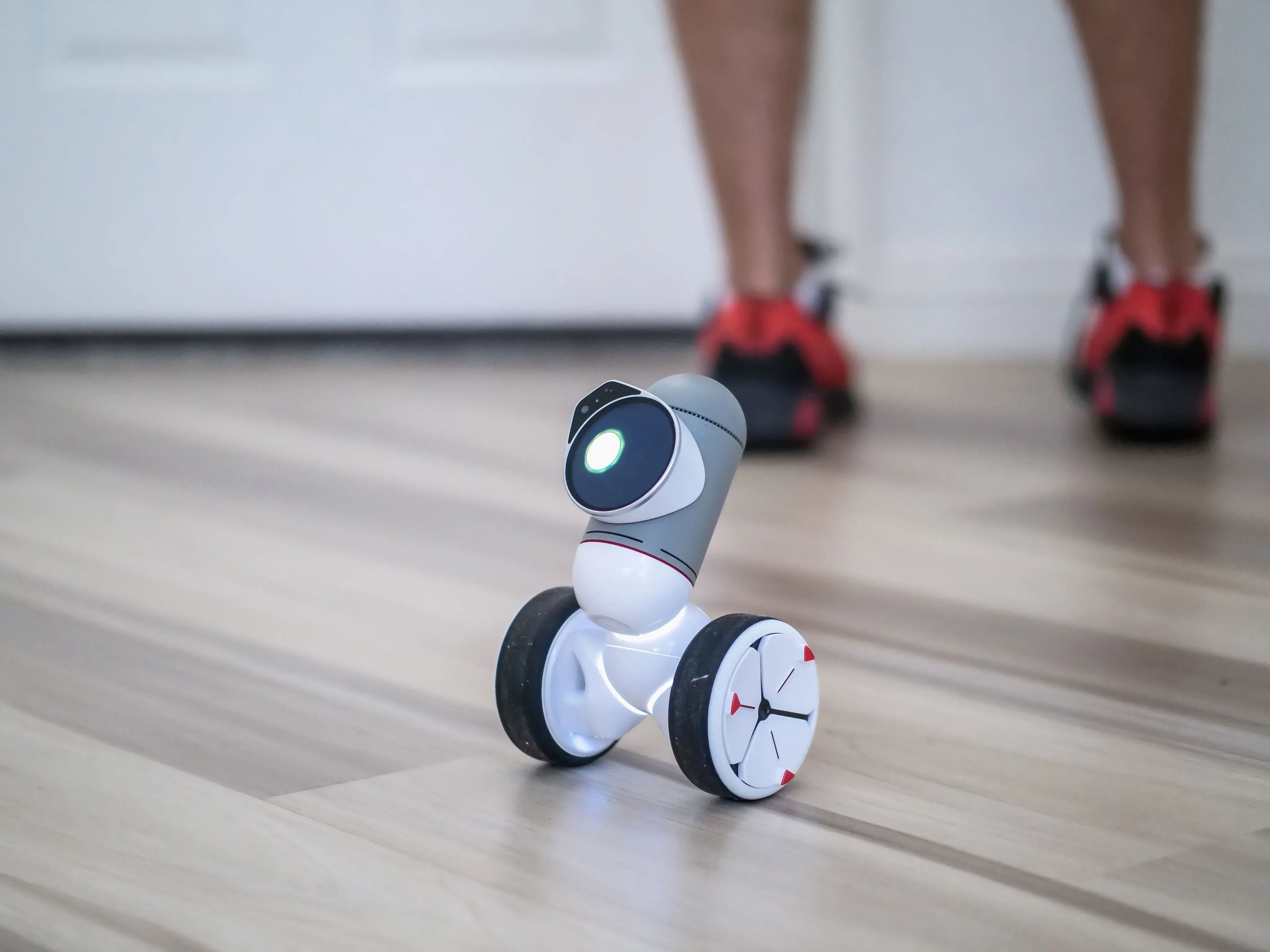
Coding and STEM robots are AI companions that are used specifically to teach children the basics of coding and much more. Most of these AI toys have a screen interface and usually three or more wheels.
The children can control what these AI toys do by selecting options on the interface, whether that's moving forward, backward or spinning. In teaching scenarios they usually make the child direct the robot through an obstacle course using the movement directions.
This directly reinforces the connection between instruction and outcome, because the child can physically see what the result is with their code.
How Do They Work?
The majority of coding robots also rely on a separate program on a tablet or phone, though some have the actual interface on the face of the robot.
Here they can drag around small slices of code to control movement, feeding the main idea of coding without actually typing. This is perfect for learning code because children can see exactly what happened, and if it fails they can try and figure out what went wrong, which is where real learning happens.
Primary Features
- Visual Block Coding: This is the slices or blocks of code referred to earlier. These blocks are put into a sequence to control each movement of the robot.
- Physical Movement: The physical movement helps the child tie their own code to the outcome, leading to less frustration when it comes to troubleshooting.
- Gradual Progression: Over time as the child gets better at coding, the AI can craft harder puzzles or obstacles to overcome.
Who Are They Best For?
Coding and STEM robots have the widest ranges when it comes to AI toys, strictly because some of them are capable of teaching advanced coding. While simpler models target the age ranges of 4 or 5, most of them target a wide 6-12 age range.
These AI toys are great for kids who are curious and love problem solving. The trial and error loop of these toys is perfect for patience building and reinforcing logical thinking.
Parent Consideration
The biggest limiting factor of the AI toys is actually the software that goes along with the robot. For example, if the toy only has a set number of missions or challenges, once a child goes through all of them it can be boring to repeat the same things.
The main thing to look at when it comes to purchasing one of these is the app reviews. Make sure whichever type you buy gets updates and new missions to keep learning fun and fresh. One slight downside is that the majority of coding robots rely on a screen to control the code, which is where screenless AI plushes have an advantage.
Key Takeaway: Coding and STEM robots are a great way to introduce coding to a younger audience by introducing a physical component. They are great at introducing trial and error with programming skills in a low stress environment. The two factors to consider are screentime and software, some parents may not like the screen component and certain coding robots with a set amount of missions may get boring over time.
AI Robotic Pets
AI robotic pets are designed to imitate the behavior and look of a normal 4-legged pet. They achieve this using sensors and an AI model powering the decisions and reactions.
Unlike previous robotic pets, these toys can actually react to their environment using AI decisions. The goal is to have an interactive pet that feels more alive compared to normal stuffed animals. They come in a variety of physical designs, most of which use a plastic shell, and advanced models can even change their behavior like a dog learning tricks.
How Do They Work?
The majority of AI robotic pets are built with a ton of sensors and microphones in their outer shell that transmit data to an AI model to determine a reaction. So if you pet its head, the AI could decide to wag its tail, and if you ignore it, it may whimper and nudge you for attention.
These are all designed to mimic the actions of regular pets like a dog or sometimes a cat. The most advanced models out there are actually capable of learning, so you can give your AI pet actual positive reinforcement, just like your average dog.
Primary Features
- Responsive Behavior: All of these toys have sensors and react to human actions with varying degrees of realism.
- Autonomous movement: The AI brain behind these toys makes autonomous movements to try and mimic an actual pet. Some advanced models can actually remember things around the house to be careful of, like stairs or a steep ledge.
- Personality Development: Depending on the model, AI robotic pets can actually develop habits and routines like a normal pet would. While less advanced models may just try to imitate this.
Who Are They Best For?
AI robotic pets are usually marketed and designed for kids aged 3-12, though the novelty usually fades around the teenage years. Younger children in the 4-7 ranges can find great delight in the sounds and movement of these toys.
Older kids usually can start to admire the personality that more advanced models offer. They are perfect for kids who desperately want a pet, but can’t get one due to logistical issues like living in an apartment with no pets allowed or a family member has allergies. They are also good for kids who struggle socially, because the pet offers unlimited positive interactions.
Parent Consideration
Durability is the primary concern of these toys, because of all the advanced components that tend to fail over time. These don’t necessarily fail because they were designed poorly, rather, living in a house they can take quite a beating, whether being sat on or dragged around.
When considering purchase make sure to check reviews on durability. Battery life can also be a concern as there's nothing more frustrating than a toy powering off mid-play session. Certain brands of these pets can actually walk themselves to a charging port, which is very helpful.
Finally there's the emotional connection element, make sure to have an age-appropriate conversation with your kid discussing how after all it is a toy. This way a child can maintain a positive happy relationship with the toy.
Key Takeaway: AI robotic pets are a great option for kids who want a real pet but cannot get one. The features and intelligence can range from brand to brand so it's important to consider what features are most important. When purchasing make sure to check reviews on durability and battery life.
Interactive Robot Companions
Interactive robot companions are arguably the most iconic representation of AI toys. They usually feature a screen for a face and are built with a microphone and speaker, and primarily focus around social engagement.
The goal is to make a child feel like they are actually talking to an AI character, complete with facial expressions and its own voice. These companions are not like the robotic pets and coding robots mentioned above, they function similarly to the AI plushes, acting as a friend.
How Do They Work?
These interactive toys try to mimic the real social interaction of a friend, with conversation and sometimes movements. Equipped with cameras they are even able to recognize faces and in some cases, remember them depending on the model.
Just like the AI plushes, they process audio input from a child and respond using AI. The advantage it has over plushes though, is that it has a face, so it makes social interaction that much more immersive.
Primary Features
- Natural Conversation: Voice recognition combined with AI smart responses make for a truly immersive experience.
- Emotional Expression: Usually given an animated face via a screen or sometimes physical, allowing for expression beyond just a voice.
- Autonomous Behavior: Allowing the robot to initiate interaction, and ask questions about the environment or respond to what a child is doing.
Who Are They Best For?
These interactive robots are usually favored among the ages of 6-14. This is because the children are old enough to engage meaningfully with its personality, but still young enough to enjoy the novelty.
Since it has a face, it may keep children more engaged in conversation longer than other AI toys. Children who struggle socially, especially at a young age, might enjoy the low-stakes environment of interacting with an AI toy like this. Older children may also enjoy them, as certain brands actually allow for customization of the AI character using a developer mode.
Parent Consideration
Toys in this category rely on ongoing software updates more than any other type. They heavily rely on facial expressions and complex social interactions, so make sure to choose a company with a good track record.
Notably, an AI toy company named Anki went bankrupt and left their AI toys in the dark as support faded. Another thing to consider is the privacy and data policy, so be sure to review the manufacturer's website before making any purchases. One downside is almost all of these toys have a screen for a face, so parents trying to avoid screens should stick to the AI plushes.
Key Takeaway: Interactive companion robots excel in social interaction with an interactive face, and a camera that can see the world around them. This is the best choice for kids who are curious and want something more interactive than an AI plush. Just like all AI toys, be sure to review the manufacturer’s website for support and to see how they handle data.
What Makes a Good AI Toy
You may be wondering what features to specifically look out for with an AI toy, here's a general list of good signs to look out for.
Uses Real AI
Unfortunately a lot of the time cheaper AI toys (especially under $50 range) will have the word AI slapped onto it, even though it ends up being a regular electronic toy. A good AI toy will have real AI powered by an LLM. This allows for them to have open ended conversation with intelligent responses, rather than cycling through preset phrases.
Grows With the Child
Most AI toys connected to an LLM get regular updates via wifi. This allows their toys to actually get smarter over time with software patches and updates. For the first time in history we can actually get a toy that gets more useful than when you bought it a year ago.
Transparent Company
The gold standard of AI toy companies always keep clear privacy and data policies. Before purchasing it would be a good idea to review the manufacturer's policies on how your child’s data is being handled.
For more information and an AI toy buying guide, we have another article located (Here)
Are AI Toys Safe for Kids?
In short, yes, when developed responsibly. Good AI toy manufacturers build their products with children specifically in mind, meaning the AI is designed to recognize children's voices and filter out any inappropriate content or themes.
Reputable companies also take data privacy seriously, following strict COPPA compliance to make sure any information collected from a child is handled safely and transparently.
Curio, for example, automatically deletes transcripts after 90 days and allows parents to request data deletion at any time through the app. Like anything though, it comes down to the manufacturer, which is why checking the privacy policy before purchasing is always worth the extra five minutes.
We have a page dedicated to answering your frequently asked questions located (Here)
Conclusion / TL;DR
AI toys are smarter, safer, and more capable than ever, and they will continue to get better over time. For parents going in informed, there has never been a better time to find a toy genuinely worth buying.
- AI Toy
- LLMs
- What is an AI Toy?
- AI Toys