Why AI Toys Sound the Way They Do: The Design Choices Behind AI Toy Voices
By Curio Team
Behind every AI toy is a voice, and more often than not, there are a lot of decisions that go into that voice. Even if one sounds robotic, there's a high chance that someone sat down and adjusted it in some way to be geared more towards kids. But what does it actually mean for a voice to be geared towards kids?
Expressive vs. Flat
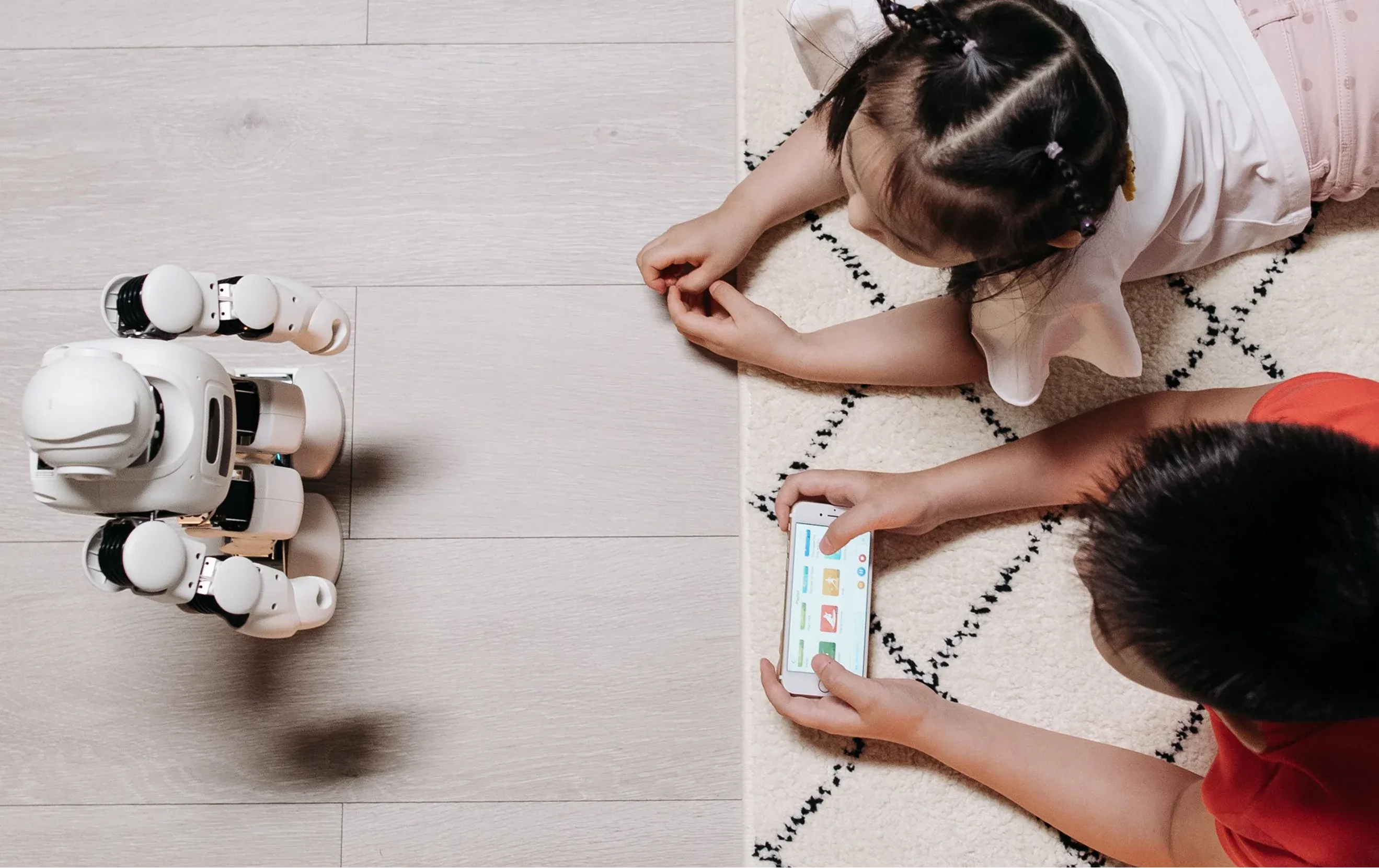
Researchers at MIT wanted to know if the voice of a children's robot changes how much kids can learn from it. So to test it, they used a robot to read a picture book to 45 preschoolers. For around half of the children, the robot used an expressive voice, and the other half got a generic text-to-speech reading. This study also leans heavily on dialogic reading (pausing mid-story to ask kids questions and build on their answers), which we actually covered in a previous blog (here).
To the children, the voice didn't matter much, and both groups said they liked the robot and learned about the same amount. However, the data showed something different. The children who heard the expressive voice tell the story looked more focused and engaged. They also copied more of the robot's story when they retold it, and told longer stories when researchers checked back weeks later.
Even if kids say there's no difference, the results say otherwise. One reason AI toys use an expressive voice is so children stay engaged and get more out of what they hear.
Friendly, But Honest
If expressive voices work better, wouldn't it be best to try and mimic a human voice? A 2025 research review suggests the opposite. It found that a synthetic but expressive voice could be the best for kids, supporting learning, engagement, and trust while making it clear the toy is not a person. Some researchers say that the voice should match what the toy is, and line up with how it looks.
The truth is, you need a balance. A toy without enough variety in its voice sounds mechanical, but one with too much can be distracting, making it actually harder for kids to understand and pay attention.
Another interesting finding came from a 2026 study involving 132 children aged 4 to 10: kids didn't seem to mind a voice that wasn't human. The younger kids in that study had no clear preference between a human and a synthetic voice.
At the end of the day, AI toys aren't trying to convince a child that the toy is human. The point is to have a fun, engaging voice without being too much or too distracting.
Voice Isn’t Everything
So, if choosing a non-human voice can be beneficial, what if a toy didn't use words at all? Casio's Moflin (which we covered in our AI Toys Around the World post) doesn't speak; it communicates with soft coos and trills. This ends up sounding somewhere in between a guinea pig and a kitten. It's a smart choice for an AI pet, because it might be weird hearing a furball talk. The little noises feel natural for its shape, and they leave owners more room to imagine what Moflin is trying to say, the way you would with a real pet.
A Voice With Personality
At Curio, we actually have a toy that was both designed and voiced by the same person. Grem's design and voice both belong to Grimes, the indie musician. This gives Grem an anchor for its personality that kids can recognize every time they talk to it.
Another reason a toy's voice matters is that kids may mimic it. Research shows that kids actually adjust their voice to match a robot's voice by changing their pitch and how long they hold their vowels. How much a child does this depends on their personality and how the child views the robot. This adds to the idea that children pick up language through speech, so they may take some of that from a toy.
Why Voice Matters Even More Without a Screen
There's plenty to engage with on a tablet or a TV, but with a screenless toy, you lose the main way kids are usually entertained: seeing. On a TV, there are colorful moving characters and scenes playing out, but with a screenless toy, everything is coming through a speaker. Now, this isn't to say screens are better at entertaining; there are still people who listen to baseball games on the radio.
That's why the MIT study is so interesting. The robot moved the same way in both groups, so the only thing that changed was the voice it used. The voice alone was enough to change how engaged kids were and how much of the story showed up in their retellings.
Essentially, having no screen makes engagement and entertainment harder, but a strong voice can not only help, it can help drive learning. That's why so much thought has to go into an AI toy's voice.
Conclusion/TL;DR
So why do AI toys sound the way they do? It's because designers are doing a careful balancing act between being too boring and being too distracting. The voice must be expressive enough that a child stays engaged, but not so expressive that it distracts from the conversation itself. Next time you hear an AI toy speak, listen for how carefully its voice was designed.
Sources:
Title: "Flat vs. Expressive Storytelling: Young Children's Learning and Retention of a Social Robot's Narrative"
Source: Frontiers in Human Neuroscience, 2017
Link: https://www.frontiersin.org/journals/human-neuroscience/articles/10.3389/fnhum.2017.00295/full
Title: "Robot speech: how variability matters for child–robot interactions"
Source: Frontiers in Robotics and AI, 2025
Link: https://pmc.ncbi.nlm.nih.gov/articles/PMC12832417/
Title: "Children's preferences for virtual agents with natural and synthetic voices"
Source: AccScience, March 2026
Link: https://www.accscience.com/journal/DP/articles/online_first/6350
Title: "Moflin, an Adorable, $400 AI Robot Pet, Is Selling Out in Japan"
Source: Tokyo Weekender, August 2025