AI Toys and Autism: Building Better Play, Communication, and Comfort
By Curio Team
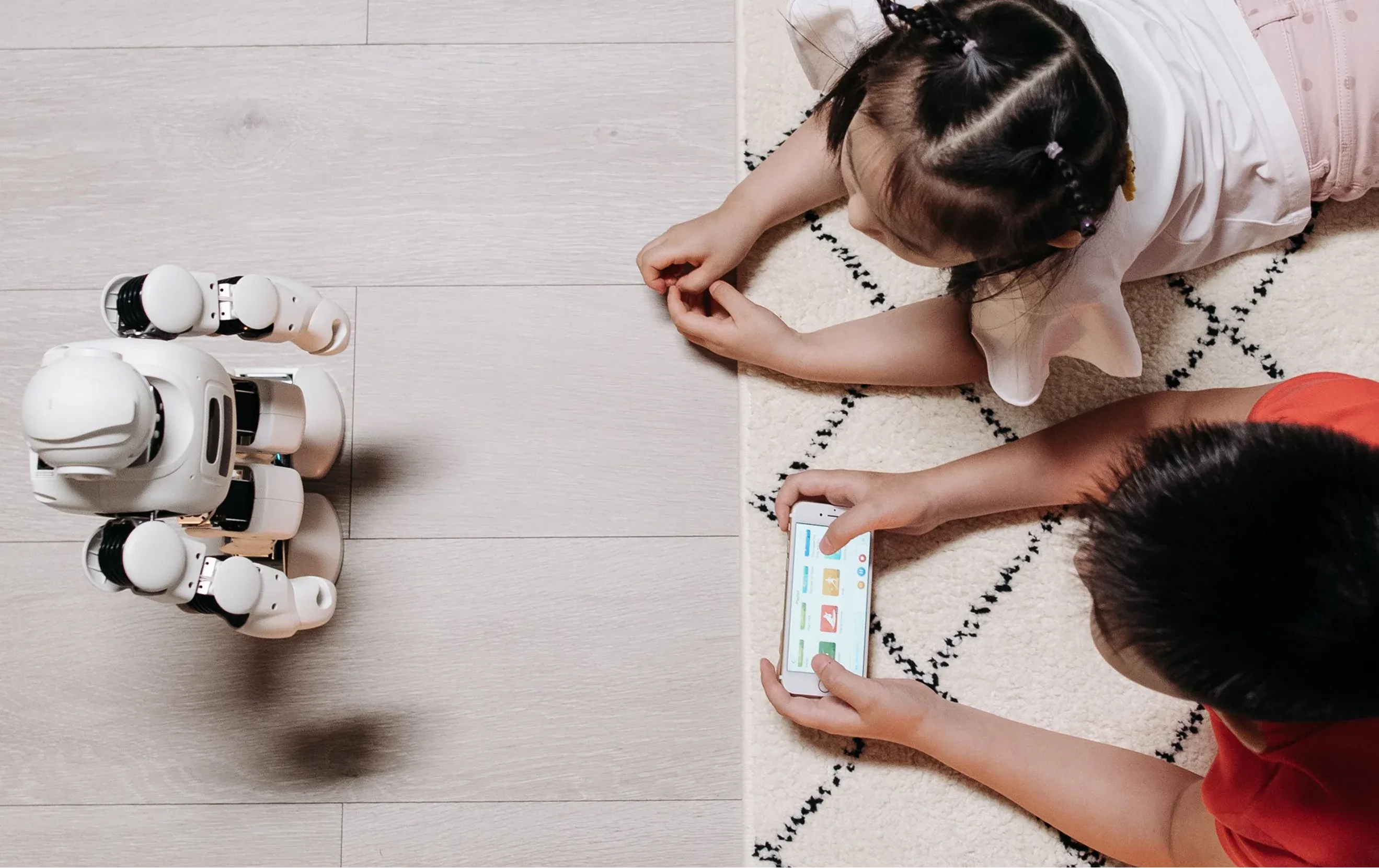
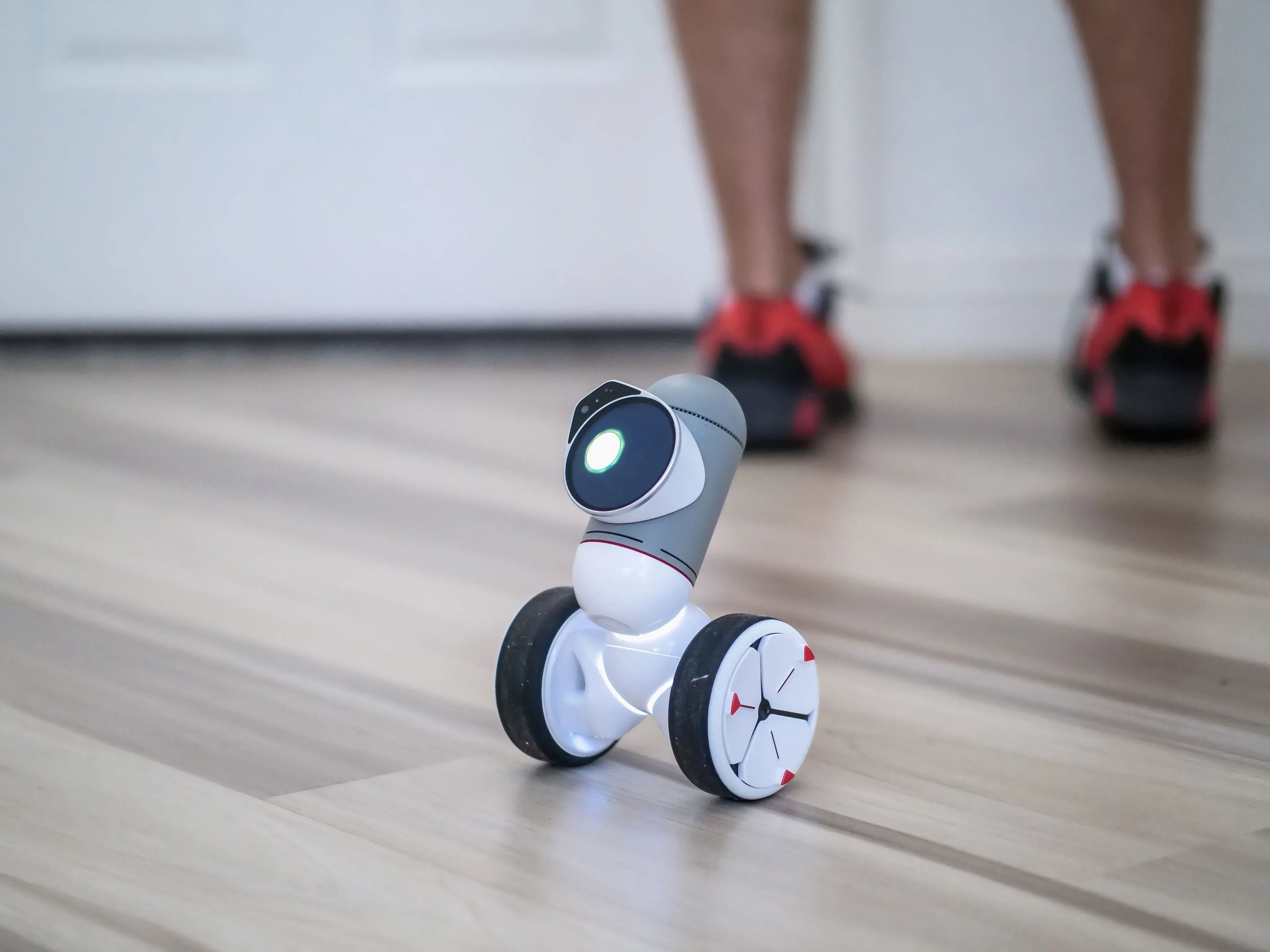
For a lot of families nowadays, the words "AI toy" can just sound like a gimmick, and the toy will probably end up in some random bin in some tucked-away closet. But for kids with sensory or social issues, AI toys are being built with features a lot of parents of autistic kids have been asking for: more controllable sensory input, more opportunities to practice communication, and more predictability.
For autistic children in particular, the right toy can do much more than just entertain. It can bring order and rhythm to an otherwise chaotic morning or afternoon play session. It can offer a new word to practice, or serve as a possible calming outlet on a hard sensory day. To top it all off, there aren't many toys in the modern world that manage to be both educational and screen-free, and a lot of AI toys are built to do both, though not every one on the market skips the screen.
This blog will use research to support a lot of the points made, but it's important to recognize that the data covered was done without AI toys, though there is still a useful connection to be found. There is research on autistic children's play and communication patterns generally, but almost none of it looks at today's AI toys with autistic kids specifically, which is the primary gap this blog is trying to address.
How AI Toys Help Manage Sensory Overload
What Is Sensory Overload?
Sensory overload in autism is when the brain is given too much information to process at once, like a crowded room, bright lights, or loud noises. This can trigger a fight-or-flight stress response, which usually shows up as emotional distress, meltdowns, or shutdowns. Most parents describe it less like a tantrum and more like the nervous system has simply shut down.
The Theory Behind Controlled Sensory Input
Traditional toys that make loud noises or have one fixed sound can sometimes overwhelm an autistic child. AI toys often come with volume settings that make the toy easier to play with at certain parts of the day. That's just one example, but the bottom line is that AI toys are a sensory outlet that's customizable by the parent.
Self-Soothing/Co-Regulation
Parents of autistic children tend to use toys in two ways: self-soothing and co-regulation. Self-soothing is when the child seeks out a toy (or a blanket) to bring themselves down from a sensory overload on their own. Co-regulation is the same idea, but with a caregiver doing it alongside them. There's research that helps explain why focusing on a single object or toy can help a child self-soothe this way.
What The Research Says
A study filmed 70 autistic preschoolers, ages 2 to 4, playing with a parent across two play settings. One used small pretend-play toys; the other used large physical toys, like a trampoline. The study found that children spent significantly more time focused on the object itself during pretend play than on the parent, while during the physical play, researchers observed children spending more time in a third state called "unengaged," not focused on the toy or the parent, just drifting. This gives some insight into how a single, absorbing object can hold an autistic child's attention. Worth flagging: the study didn't use an AI toy and wasn't about sensory regulation specifically, but it's a useful window into how autistic children engage with objects, and it's the closest research we have to explaining why a self-soothing AI toy might work the same way.
Sensory Regulation Features to Look For
- Screenless: some AI toys come with a screen, which can add another layer of visual overload.
- Adjustable volume: ideally with a low/no-sound mode
- Dimmable or color-adjustable lighting: avoid toys stuck on bright, flashing, or strobing patterns.
- Texture options: soft, weighted, or varied fabric rather than one fixed material.
- Calming response patterns: toys that can shift into a slower, quieter "de-escalation" mode.
- A genuine off switch: some toys don't have one, which is a problem when a child needs total sensory quiet.
Sensory needs are highly individual, and what works for one kid often doesn't work for another. So the important thing to keep in mind is to keep trying and check the return policy before buying.
For a full research breakdown and a longer-form article on AI toys and sensory regulation, check out our article (here).
How AI Toys Help Build Communication & Social Skills
What Are Common Communication Challenges?
Communication differences in autism can show up in a few different ways: delayed speech, literal interpretation of language, and difficulty with non-verbal cues like eye contact. These differences often lead to a lot of frustration for the child in social situations, especially at a young age. Not only is it frustrating for the child, but it can also be "annoying" for people who aren't accustomed to interacting with an autistic child.
The Case for Conversational AI
AI toys have a unique advantage when it comes to interacting with not just autistic children, but all children: they have as much patience as they have battery. AI toys act as a friend with infinite patience, one who doesn't mind if a child takes extra long to answer and won't judge if a child gets an answer wrong. It's easy to imagine why some kids might warm up faster to a toy than to a classroom full of peers; there's no pressure of being watched or graded.
Turn-Taking and Social Scripting
Conversational AI toys are built around structured back-and-forth exchanges: the toy asks a question, waits, responds, and asks another. This structure is designed to give kids repeated, low-stakes practice with the turn-taking that real conversations require. Certain autistic kids struggle with that outright, so it can help to solely focus on and practice it. You can also prompt AI toys to go through social scenarios for practice.
What The Research Says
A 2021 systematic review looked at play-based interventions that can help children with autism learn social skills, mostly in school and classroom settings. The review found promising evidence showing that play can be used to grow social communication and awareness. Worth noting: this review is about play-based approaches in general, not AI toys specifically, so it's more of a "general area shows support" data point than proof that any one toy works.
One Caveat
AI toys should never be used to replace real speech therapists. Yes, they do offer good environments for low-pressure conversation. They work best as a supporting tool rather than as actual therapy or a treatment for speech issues. At the end of the day, the primary goal of AI toys is entertainment.
Tips For AI Toy Play
When playing with an AI toy, you can actually prompt it to talk about certain scenarios, for example, saying "Let's practice ordering ice cream" to have an imaginary ice cream shop scenario.
Oftentimes, in the app that goes along with the AI toy, you can choose topics to cycle through and, conversely, choose topics to stay away from, beyond normal guardrails.
For a full research breakdown and a longer-form article on AI toys and communication, check out our article (here).
How AI Toys Help Build Routine and Reduce Anxiety
Why Does Predictability Matter So Much?
For a lot of kids with autism, not knowing what comes next isn't just annoying; it's genuinely stressful. There's a theory in autism research sometimes called "autism as a disorder of prediction," in which a number of autism's core traits actually link back to the way the brain registers and predicts new information, making unfamiliar information feel uncomfortable rather than neutral. For example, a lot of autistic kids stick to bland, familiar foods, not because they dislike variety, but because the predictability of it is what feels safe. Under that lens, uncertainty itself becomes more of a direct trigger for anxiety, even when nothing dangerous is actually happening. It's very common for autistic kids to get frustrated over schedule changes, for the same reason.
How AI Toys Try to Stay Consistent (Even With LLMs)
An AI toy running a generative AI will actually give a slightly different response every time, so wouldn't that mean consistency is out the window? But it's not really where the consistency comes from with AI toys; it comes from other constants that the toys bring to the table. The same character, with the same voice, doesn't mind having the same questions asked over and over again.
What Stays Consistent
- Character and Voice: The toy's personality and tone stay the same, even when the words don't.
- Physical Presence: The object doesn't change at all; it stays the same plush.
- Interaction rhythm: Conversational AI toys follow a strict back-and-forth, prompt and response.
- Non-verbal cues: A lot of toys use the same light pattern or chime for the same moment every time, like a specific sound before bedtime.
What The Research Says
It is important to remember that the "disorder of prediction" idea is based on a theoretical paper rather than a physical experiment. You can view it more as a logical framework for why consistency matters, rather than a single study. Keep in mind that the paper compiles existing studies instead of introducing its own new dataset.
For a full research breakdown and a longer-form article on AI toys and routine, check out our article (here).
What to Look for in an AI Toy for a Child with Autism
Not all AI toys are a good fit for kids with autism; there are a few features that matter more than the specs of the device. Here's what to look for and what actually makes a difference.
Features That Matter
- Customization: Does the toy stay the same out of the box, or can it change and adapt?
- Sensory Settings: If it has lights, can you turn them off? Does it have an actual off switch, for when play becomes too much?
- Privacy Policy: What is the privacy policy of the toy? This matters not just for kids with autism but also for all kids.
- Screen-Time: Does the toy have a screen, and does the toy have a limit you can set on it?
Red Flags to Watch For
- One-mode-only toys: If a toy can't be turned down or adjusted, it can't be matched to your kid's actual sensory needs.
- Overstimulating Defaults: Bright, flashing lights or loud sounds with no easy way to dial them back.
- No Off Switch: Usually not a problem until you have a problem, then it is.
- Vague Privacy Policy: A problem with some AI toy companies that hide their privacy policy.
General Age Recommendations
- Younger Kids: They do better with non-conversational toys; early on, choose ones with simple sensory features.
- Early Elementary: This is where conversational AI toys thrive, and children benefit the most, since kids are still young enough that routine support matters daily.
- Older Kids: They benefit more from communication-focused features than sensory ones, and should be part of picking the toy themselves.
Quick Check/TL;DR
- Can I adjust the volume and light?
- Does it have a manual off switch?
- Is the privacy policy actually clear?
For the full buyer's checklist and a longer breakdown of specific red flags to watch for, check out our article (here).
Conclusion
AI toys aren't a fix for autism, and they aren't trying to be. But the features they currently have can support learning and engagement for autistic kids. They're adjustable, which helps kids who get overwhelmed easily, and they give kids a low-stakes environment to practice speaking and social interaction.
Unfortunately, research around AI toys is pretty sparse, and research specifically on autistic kids and AI toys is even sparser. What's out there so far is heading in a promising direction, though, which is reason enough to try one and see how it fits into your child's play life, not proof that it'll work for your kid specifically. Pick the one that fits your kid, not the one with the best marketing, and don't be afraid to return it if it's not the right fit.
Sources:
Title: "Autistic preschoolers' engagement and language use in gross motor versus symbolic play settings"
Authors: Amanda V. Binns, Devin M. Casenhiser, Stuart G. Shanker, Janis Oram Cardy
Source: Autism & Developmental Language Impairments, Vol. 7, published July 27, 2022
DOI: https://doi.org/10.1177/23969415221115045
Institution: School of Communication Sciences and Disorders, Western University (London, Ontario); Bloorview Research Institute, Holland Bloorview Kids Rehabilitation Hospital (Toronto); Audiology and Speech Pathology, University of Tennessee Health Science Center (Knoxville); Department of Philosophy, York University (Toronto)
Title: "A Systematic Review of Play-Based Interventions Targeting the Social Communication Skills of Children with Autism Spectrum Disorder in Educational Contexts"
Authors: Christina O'Keeffe, Sinead McNally
Source: Review Journal of Autism and Developmental Disorders, Vol. 10, Issue 1, pp. 51–81 (2023)
DOI: https://doi.org/10.1007/s40489-021-00286-3
Institution: Dublin City University (Ireland)
Title: "Autism as a disorder of prediction"
Authors: Pawan Sinha, Margaret M. Kjelgaard, Tapan K. Gandhi, Kleovoulos Tsourides, Annie L. Cardinaux, Dimitrios Pantazis, Sidney P. Diamond, Richard M. Held
Source: Proceedings of the National Academy of Sciences (PNAS), Vol. 111, No. 42, pp. 15220–15225, published October 21, 2014
DOI: https://doi.org/10.1073/pnas.1416797111
Institution: Department of Brain and Cognitive Sciences, Massachusetts Institute of Technology (Cambridge, MA); Department of Communication Sciences and Disorders, MGH Institute of Health Professions (Boston, MA)