Can AI Toys Help Build Routine for Autistic Kids?
By Curio Team
Over the years, autism research has mostly focused on one part of an autistic child's life at a time, whether that be sensory sensitivities, motor coordination, social cognition, or language delays. They looked at all these different pieces of the puzzle as if they were isolated, like separate symptoms, but the research we're covering today asks a single question: what if autism has one root cause, and what if it's all connected? A group of MIT researchers set out to find this root cause and whether a lot of those traits might actually link back to one reason. Compared to the other articles we've covered, this one's interesting because it's not actually a study; there's no new experiment here. It's more of a theory, one that was built through reviewing existing research. Since there's no formal experiment behind it, you can take it with a grain of salt, but it's still very interesting to hear about, and they make a pretty good case for autism being linked to a root cause.
The Goal of The Paper
Published in the Proceedings of the National Academy of Sciences in 2014, the paper was led by Pawan Sinha and Richard Held at MIT, along with six other researchers across MIT, Massachusetts General Hospital, and IIT Delhi. Their goal was not to run a new experiment on a new group of kids; it was to look across three decades of autism research, sensory studies, motor studies, social studies, language studies, and ask a bigger question across all of them: is there a single underlying mechanism that would explain why so many seemingly unrelated autism traits tend to show up together?
They landed on the hypothesis that a lot of these traits come down to one thing: difficulty predicting what will actually happen next. While most brains automatically think "okay, this is something new, I'll try it, I'm not scared of it," an autistic person can actually be scared or wary of something even when they have no reason to think it'll hurt them. They lay this out as basically not understanding what's coming next.
The Theory’s Argument
The researchers' central idea is that predicting what happens next isn't one single skill, it's something the brain is doing constantly in the background. Everything you do involves guessing what will happen next: guessing how a sentence will end, sensing where a ball will be half a second from now, sensing that your friend's smile means something good is about to happen. The paper argues that if the underlying prediction system autistic people rely on is somehow impaired, an otherwise orderly world can start to feel like everything is happening by magic, events with no discernible cause, because they were never predicted, so they register as coming out of nowhere.
From that idea, the researchers connected several well-known autism traits back to that main one:
Insistence on Sameness
A hallmark of autism is the insistence on sameness and rituals, whether that's sticking to routines, resisting schedule changes, or repeating specific actions. The paper connects this to well-established findings from anxiety research: unpredictability itself raises anxiety, even when nothing bad actually happens. Under that framing, rigid routines aren't stubbornness; they're a way of securing stability in a world that, to them, doesn't feel predictable.
The same logic gets applied to stimming: parents report that stimming shows up most during the most overstimulating moments, used as a repetitive pattern to counterbalance a chaotic one, like a crowded room.
Sensory Sensitivity
It's estimated that around nine in ten autistic kids have some sort of sensory hypersensitivity. The paper's explanation isn't that their senses are stronger; it's about habituation, the brain's ability to tune out a sound or sensation once it's been established as safe and repeating. Habituation itself depends on predictability, on knowing a sound will be the same as the last one. If that prediction is weaker, the brain never fully tunes it out, so a sound stays just as jarring the hundredth time, while a neurotypical brain stops noticing it after the first few instances.
Trouble with Moving Objects
This one's a bit counterintuitive, because autistic kids are often drawn to moving objects and enjoy things like video games. What the paper argues is that anticipating where a moving object will be a moment from now is what seems difficult, not seeing the movement itself. That's often why catching a ball or stepping off a curb can seem significantly harder for them than it would for a neurotypical person; they're tying it back to not being able to predict when the ball will arrive or when their foot will clear the curb.
Islands of proficiency
The paper also uses the theory to explain areas where autistic people often do exceptionally well, whether that's math, calendar calculations, or music. What connects these skills is that they're all rule-based, so you always know what happens next. In math, you always know 4 x 4 is 16. In music, the notes in a scale follow the same order every time. The moment they're doing something they can't predict is where the struggle shows up, which also explains why social situations are so much harder: they're constantly shifting and require predicting what somebody will say or do next.
What Counts as Evidence Here?
This is the part we have to be careful about. The 2014 paper itself didn't run a new study on a new group of kids; it built its case by pulling together findings from over 100 existing studies across sensory processing, motor anticipation, social cognition, humor research, brain imaging, and even animal models, showing how one shared prediction mechanism could explain results from all those areas. It's a real, peer-reviewed, heavily cited contribution; it's been cited over 500 times since publication.
One thing worth mentioning: the researchers didn't just use the theory to explain traits that were already known; they also used it to predict traits nobody had specifically tested for yet. And it turned out one of those exact patterns had already shown up separately in autism research done in mice. Making a prediction in advance and having it check out is a much stronger type of evidence than simply explaining your own theory after the fact.
Since 2014, some of the researchers have gone on to test the theory more directly. Early follow-up work looked at habituation, how quickly the brain stops reacting to a repeated, predictable sound or sensation. That research found autistic participants habituated more slowly than non-autistic participants, which is exactly what the theory would predict. It's still not a settled, official explanation for autism, but the theory is gaining more traction as the years go on.
What Does This Mean For AI Toys?
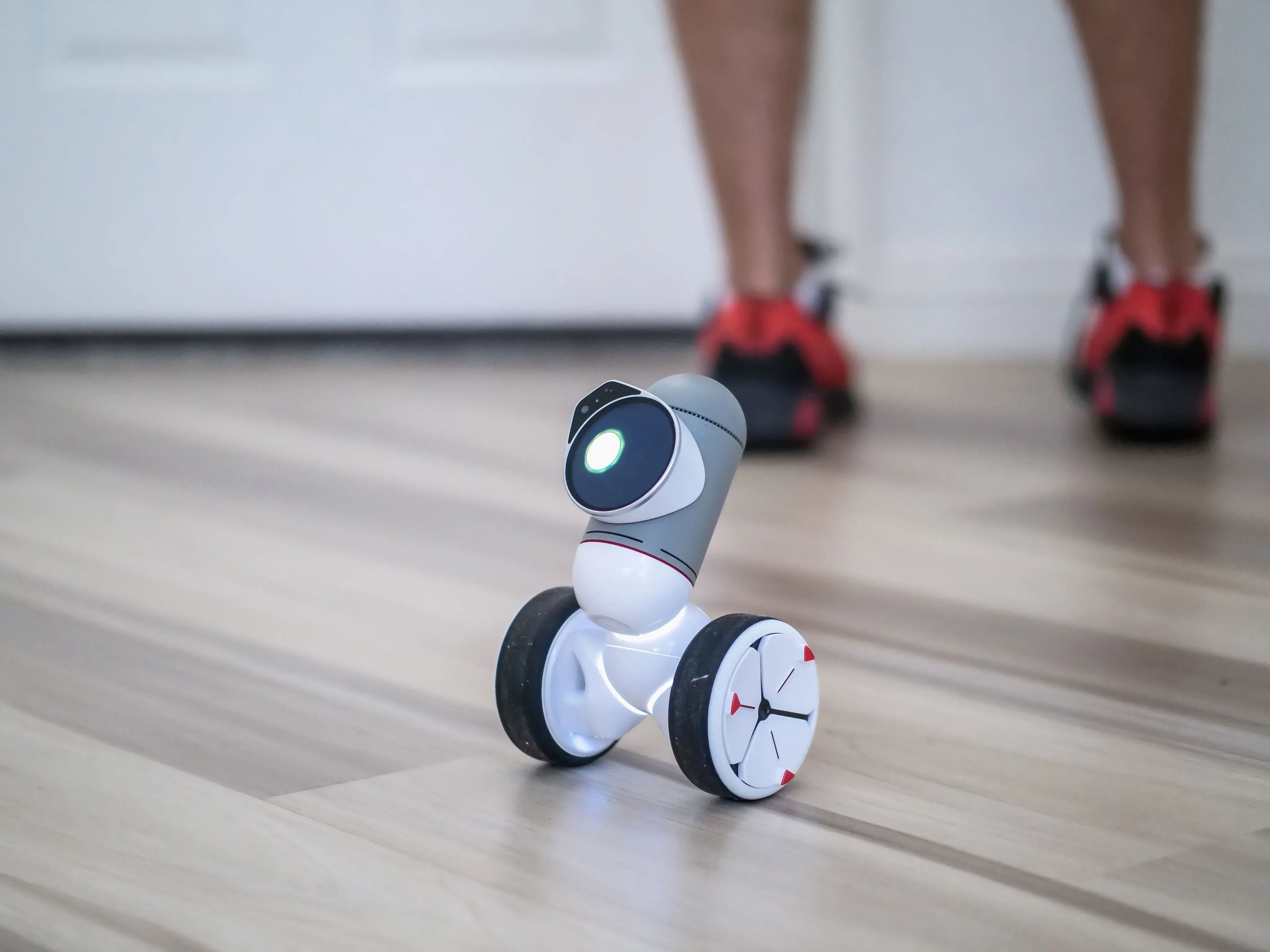
If the theory is true, the practical implication is pretty simple: predictability lowers stress for an autistic child, and the opposite, unpredictability, raises it. That's where AI toys have an interesting, if untested, angle. Generative AI, which is what powers the toy, phrases things slightly differently every time, since it's generating responses through an LLM, so it's not scripted or predictable word for word. But the predictability an AI toy offers doesn't come from its exact responses; it comes from its consistency, the same character, the same voice, the same back-and-forth rhythm every single time. Those are the constants an AI toy holds onto even when the actual response is different. Nobody's tested that directly, so take it as a logical extension of the theory, not a finding.
One Caveat
Even if that holds up, predictability from a toy isn't the same as fixing what's actually stressful in a kid's day. It won't make a chaotic classroom easier to sit through, or a rough lunch period go smoother. Autistic kids still need support from licensed therapists and proven techniques for managing day-to-day stress. An AI toy can be a small, steady constant, but it's not a stand-in for real help.
Conclusion/TL;DR
This article's a bit different from the others we've done for Curio, since we usually cover actual studies with real data. This one's a theoretical paper instead, and it reshapes how we think about where a lot of autism's traits come from. So, to settle the question this article opened with, can AI toys help autistic kids with routine and anxiety? There's no answer to that yet. But if the theory holds, the parts of an AI toy that stay constant might matter more than the parts that change, and that's a pattern worth watching as more research comes out.
Sources:
Title: "Autism as a disorder of prediction"
Authors: Pawan Sinha, Margaret M. Kjelgaard, Tapan K. Gandhi, Kleovoulos Tsourides, Annie L. Cardinaux, Dimitrios Pantazis, Sidney P. Diamond, Richard M. Held
Source: Proceedings of the National Academy of Sciences (PNAS), Vol. 111, No. 42, pp. 15220–15225, published October 21, 2014
DOI: https://doi.org/10.1073/pnas.1416797111
Institution: Department of Brain and Cognitive Sciences, Massachusetts Institute of Technology (Cambridge, MA); Department of Communication Sciences and Disorders, Massachusetts General Hospital Institute of Health Professions (Boston, MA); Department of Biomedical Engineering, Defense Institute of Physiology and Allied Sciences (New Delhi, India)