Do You Need an AI Toy If You Already Have Alexa?
By Curio Team
If you already own an Echo on your kitchen counter, you could be asking yourself, why would I need an AI toy if my kid already talks to this? It's a fair question, especially if they interact with it on a daily basis. The answer essentially boils down to what each one was built for. Alexa and AI toys can both talk with your child, but they play very different roles in family life. Here are some of the main differences that give AI toys the edge over Alexa.
What Alexa Does Well
Let's actually start with Alexa and give credit where credit is due. Starting as one of the first voice assistants available, Alexa has come a long way, even offering Alexa+ now, which is free with Prime or a paid subscription without it. With Alexa+, children can explore new topics through back-and-forth conversation, learn fun facts, play trivia games, and even co-create stories with Alexa, which asks them what characters and themes they'd like to include. This is much more advanced than the original one-line answers like "today will be 74, with showers at 4 pm.”
Parents also get a pretty good amount of controls. When you set up a profile for a child, Alexa can recognize their voice and give kid-friendly responses on compatible Echo devices around the home. It can filter explicit songs, block shopping, and limit kids to parent-approved content. The Parent Dashboard lets you set a daily time limit and monitor their activity.
So if you already have an Amazon Alexa with Alexa+, you may have a pretty good voice companion already.
The Differences
What sets AI toys and Alexa apart breaks down into just a few differences.
Difference #1: An Assistant vs. a Toy
Here is the biggest difference, and Amazon says it the best. Echo Dot Kids is a speaker made for kids, but it is not a toy.
Alexa is a household assistant that just so happens to have a kids mode. It sets timers, checks the weather, plays music, and turns off the lights. Kids can and do have fun with it, but it's not its main job.
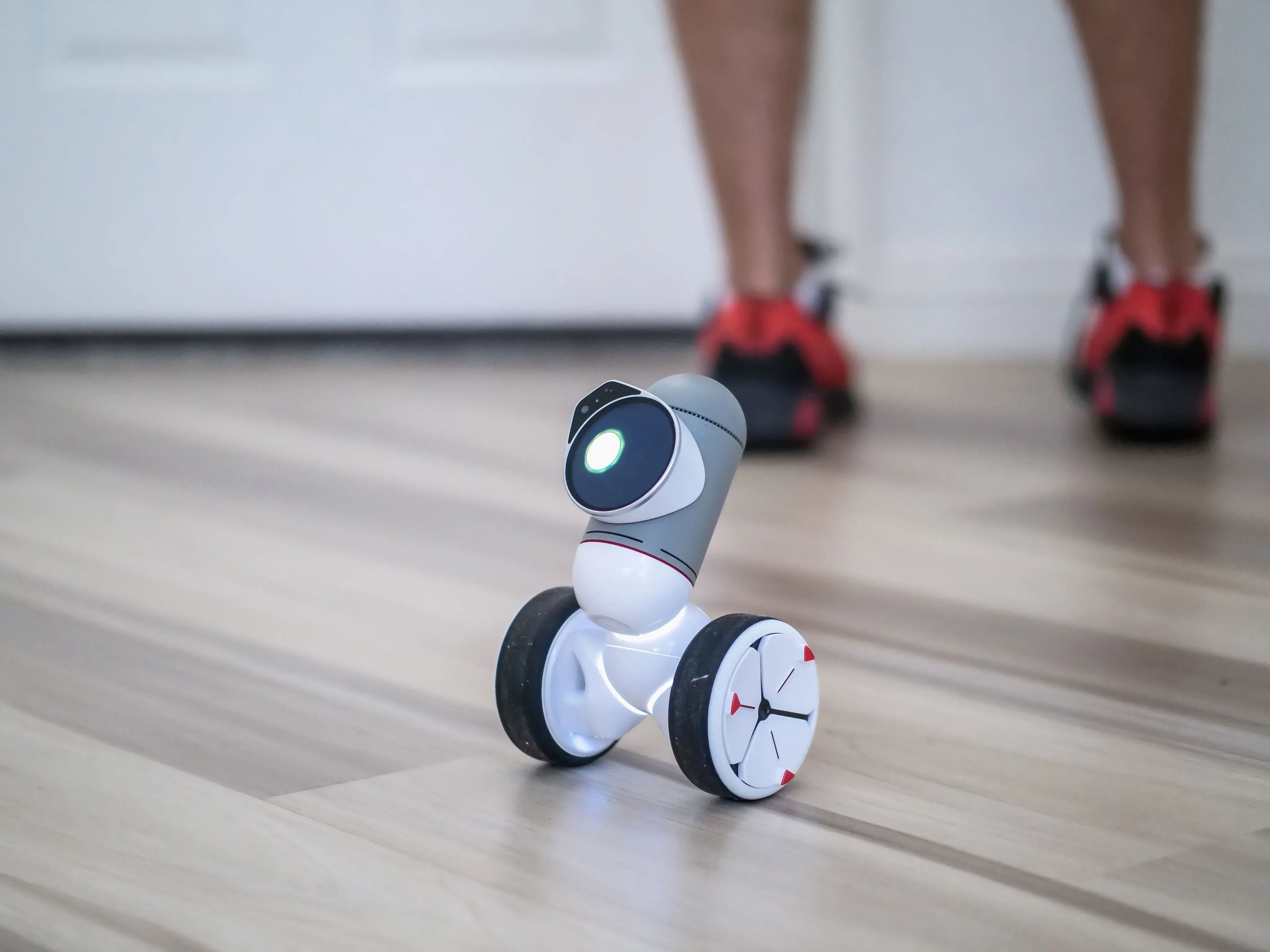
An AI toy is the opposite; its entire existence was built to engage and entertain children. Curio's toys, for example, can sing songs and play games like 21 questions. Alexa can do it too, but Curio's toys were built for that, and they speak with a character's voice.
Difference #2: Where It Lives
If Alexa lives on the counter or the nightstand. Your child must go to it.
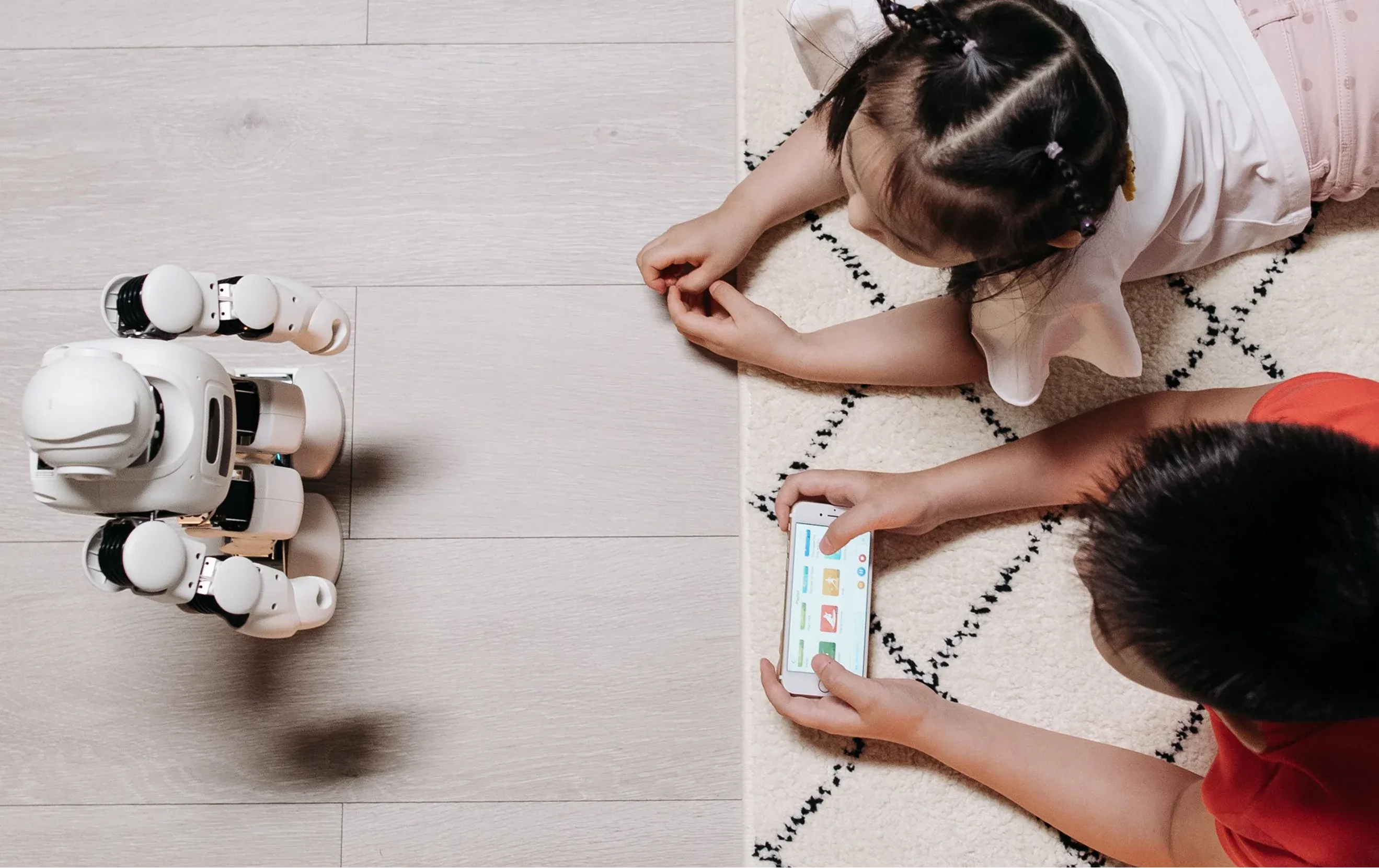
An AI toy goes with the child. It's a plush they can hug and carry from room to room. It can sound like a small difference, but from a child's perspective it is huge. A lot of memories children have are with a favorite toy, and now think about how much more impactful it can be when they can actually talk to it. One parent who tested a Curio toy with her 4-year-old found that in the first few days, her son carried it everywhere, chatting with it about dinosaurs, superheroes, and bedtime stories.
Difference #3: A Character, Not Just a Voice
With Amazon Kids+, Alexa can change its voice to animal characters like an owl, dragon, tiger, or panda. At the end of the day though, it is still Alexa, the same assistant the rest of the family uses, just disguised as a creature.
An AI toy has its own character, with its own name, voice, and personality. How an AI toy responds matters a lot. In a previous article, we looked at a study from Duke University, where children judged Alexa smarter than a Roomba but felt like neither deserved to be yelled at or harmed. Kids already form opinions about the machines they talk to. A toy that has a consistent personality gives them a character to build a relationship with and to practice kindness on.
Difference #4: Made for Everyone vs. Made for Kids
Alexa is a family device that anyone can use daily. Mom checks the weather, Dad sets a timer, and Grandma asks for her favorite songs. You won't usually see Grandma talking to Gabbo, one of our AI toys, in the mornings, though.
An AI toy is made just for kids. Whether it's one child or a pair of siblings taking turns, everything it does is made for kids first. Parents can shape how it talks too. In Curio's parent app, you can see which model the toy is using and add prompts to steer the conversation. If you want the toy to talk more about dinosaurs, for example, you can tell it to.
Difference #5: Screen-Free by Design
Both a standard Echo and an AI toy can be screen-free, which is great. But Alexa is also featured on a lot of screens, and a lot of times that's the one the kid uses. AI toys like Curio's are built without screens from the start, with no screen or tablet needed during play. It's more of a way to play without a screen.
Conclusion/TL;DR
Do you need an AI toy if you already have Alexa? Not necessarily. They're simply different tools. Alexa with Alexa+ can be a kid-safe helper used by the whole house. An AI toy is a playmate, maybe less useful as an information source, but its primary objective is to entertain.
To put it simply: if you want answers, stick with Alexa; if you want play, get an AI toy.
Sources:
Title: "Echo Pop Kids" product listing, Alexa+ features
Source: 9to5Toys, January 2026
Link: https://9to5toys.com/2026/01/18/amazon-echo-pop-kids-smart-alexa-speakers/
Title: "Alexa for Kids"
Source: Amazon
Link: https://www.amazon.com/alexa-for-kids/b?ie=UTF8&node=21474972011
Title: "What Is Amazon Kids on Alexa?"
Source: Amazon Customer Service
Link: https://www.amazon.com/gp/help/customer/display.html?nodeId=G9VG5SWCQLED7MJS
Title: "This AI voice toy belongs on your kid's holiday wish list — here's what mine loved about Grok by Curio"
Author: Caswell, A.
Source: Tom's Guide
Title: "The Minds of Machines: Children's Beliefs About the Experiences, Thoughts, and Morals of Familiar Interactive Technologies"
Authors: Flanagan, T., Wong, G., and Kushnir, T.
Source: Developmental Psychology, 2023