What Kids Learn About Kindness From How They Treat Their AI Toy
By Curio Team
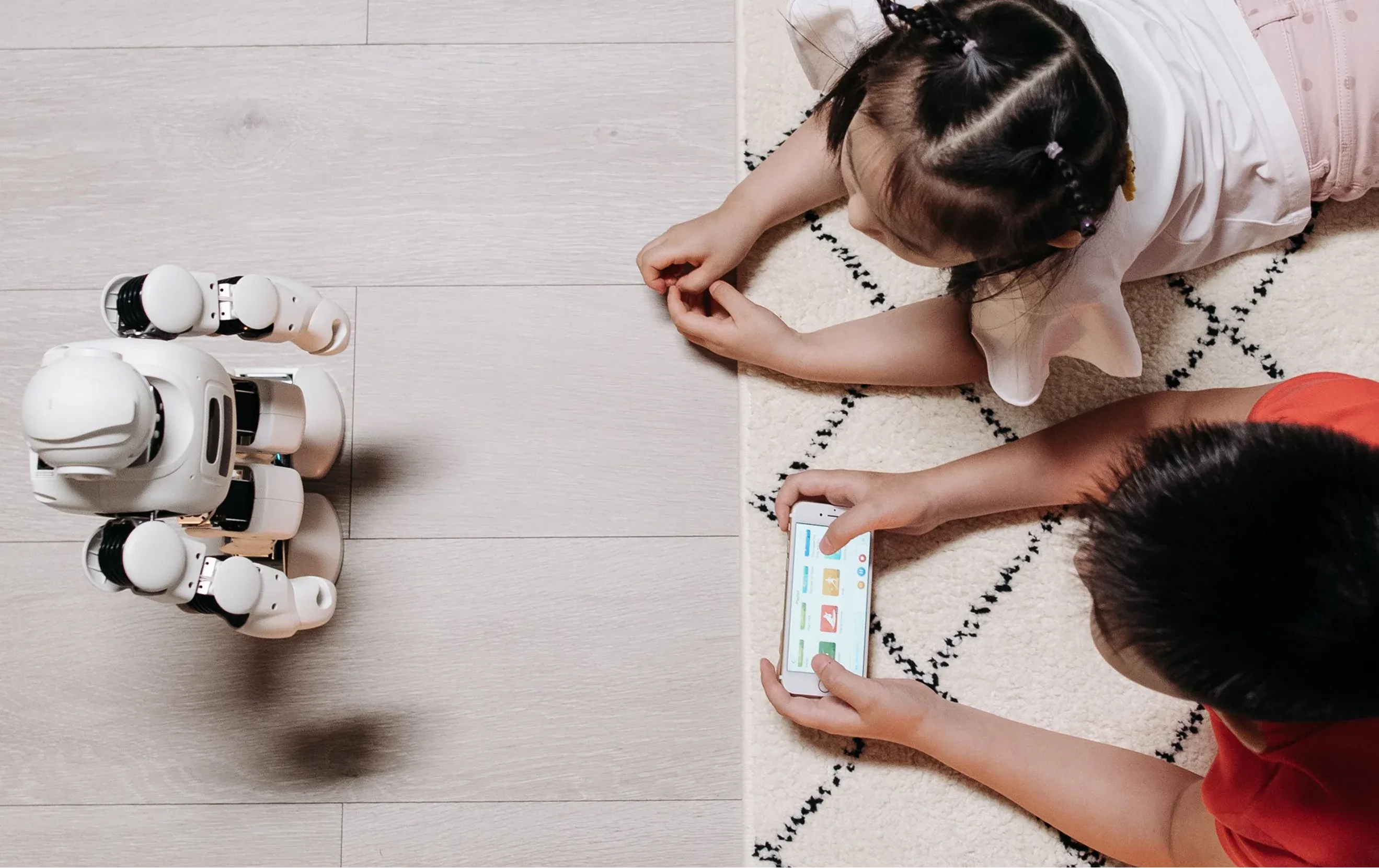
Children have always played with toys and treated them like they're alive. Now the newest toy in the room can actually talk back, and that's raising new questions. Can a child learn kindness through how they treat their toys? And how do AI toys fit into all of this?
On the other hand, there's the opposite worry: does a kid who barks commands at Alexa all day start speaking like that to other people? Most of us grew up being told to say please and thank you with every interaction. Is that being lost today?
While that's a broader cultural question, companies have heard the concerns. The kids' version of the Amazon Echo Dot will respond with something along the lines of "thanks for asking so nicely" when a child says please.
The good news is, while not conducted on AI toys themselves, researchers have been studying how children interact with robots and smart devices. What they've found is that children give machines a base level of kindness, and that they can actually learn kindness from a machine as well. Today we've pulled together three studies that support these ideas.
The Robot in the Closet
One of the most interesting studies came out of the University of Washington, where researchers looked at how children react when they observe mistreatment. Researchers had 90 children, aged 9, 12, and 15, spend 15 minutes with a humanoid robot named Robovie. The robot chatted with them, showed them around, and played a guessing game.
Then, during one of Robovie's turns, an adult interrupted and announced that it was time for the robot to go in the closet. Robovie protested and pleaded that it didn't have enough chances, and that the closet was dark and scary. The adult put it in the closet anyway.
Most of the children took Robovie's side. 88 percent felt that the robot was being treated unfairly, and 54 percent said putting it in the closet wasn't right.
During the 15 minutes the children had with the robot, every child interacted with it socially, through words and gestures. In post-interviews, most said that Robovie was intelligent and had feelings, and many of them saw it as a friend.
What was really interesting was when the researchers asked more nuanced questions. The children said the robot deserved fair treatment and shouldn't be psychologically harmed, but they didn't think it had rights like liberty or voting. It could be bought and sold. The children landed somewhere in between, treating Robovie as something that deserved decency even if it wasn't alive. The younger children felt more passionately about the robot, while the 15-year-olds were more reserved.
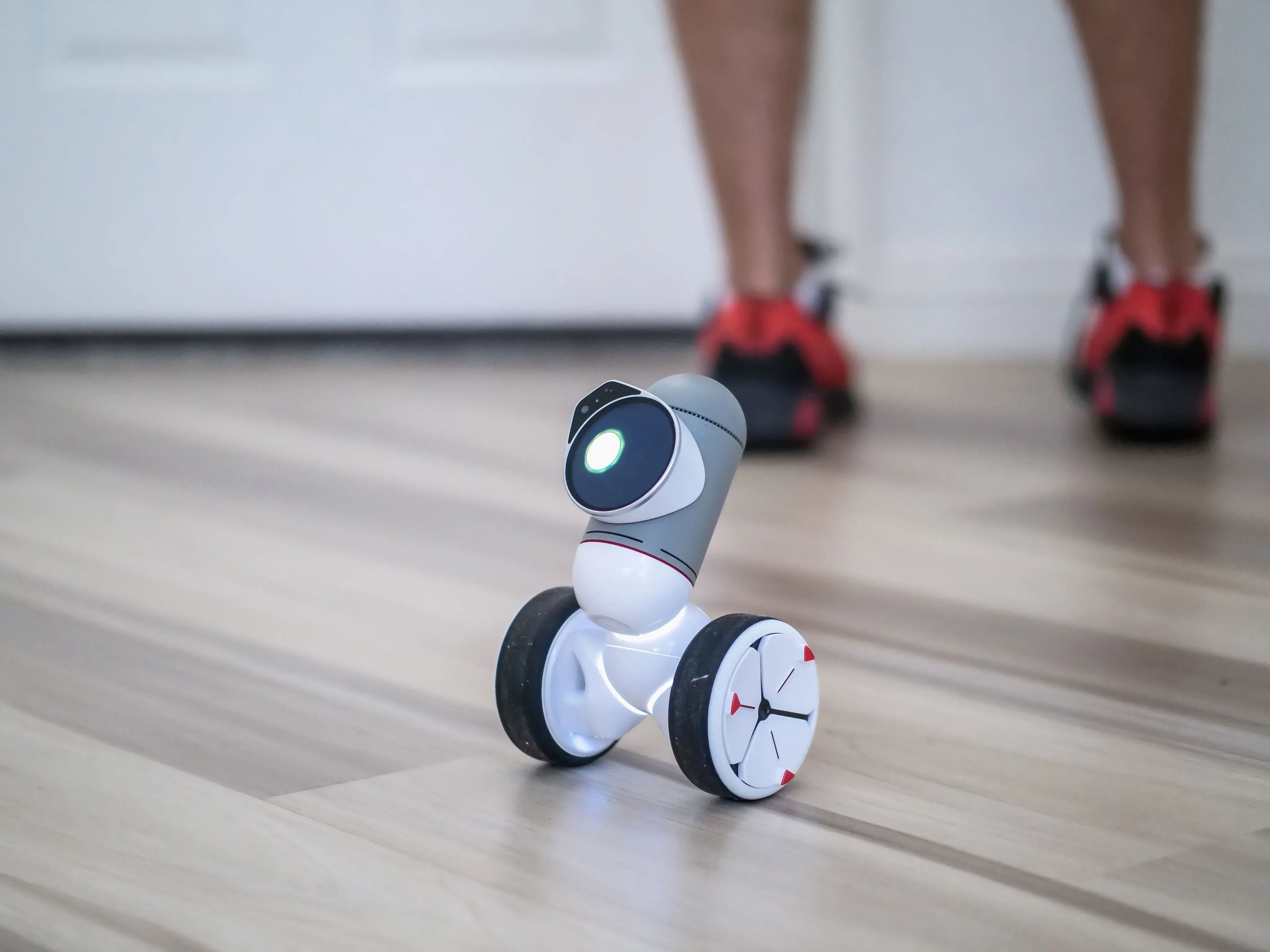
For AI toys specifically, it's a great starting point. A toy that takes turns and is polite invites fairness into a child's life. The instinct is already there; it just needs some reinforcement, and an AI toy can provide that.
Kindness Without Feelings
Another study, from Duke University, looked at how children felt about other types of robots, including Alexa, a Roomba, and a humanoid robot. Researchers recruited 127 children aged 4 to 11 (most of them younger than in the previous study), then showed them a short clip of each of the three technologies. Then they asked the children what each one could think, feel, and deserve.
The children immediately drew conclusions about the intelligence of each robot. They thought that Alexa was much smarter than the Roomba, but they felt that neither one deserved to be yelled at or harmed. As the lead researcher put it, kids don't think a Roomba can really think or feel, but they still believe it should be treated well, even if it can't hear the yelling.
The reasons they gave varied, and each child had their own unique reasoning. One child argued that yelling could break its microphone; another said that the robot would feel very sad. Prying more into what would happen if you harmed the robot, the younger children said it was simply off-limits, while the older children acknowledged they could hurt it, but that it would be bad to do.
This shows a common pattern in children's psychology: kids are kind to things even when they don't think those things can feel. Talking seems to amplify it, similar to how the children assumed that Alexa was smarter because it could talk. When a kid drops their toy and says sorry, that kindness is coming from the kid. Of course, this outlook changes with age.
The Generous Robot
So far, kindness and empathy have been given to the robots, but a study from the University of Amsterdam suggests it can go the other way too.
Researchers had 61 children aged 8 to 10 play four rounds of a game against a computer alongside a social robot. After each round, both the robot and the kid could give away some of the stickers they won. Some children played with a generous robot that gave away a lot, and others with a robot that kept most for itself.
Children who saw the generous robot giving away more stickers gave away more stickers themselves. The generous robot was also able to change how many stickers kids thought their peers would share, shifting their sense of what's normal.
The effect also held up over the full course of the game. The generous robot had the biggest impact on whether or not kids gave away anything at all in the first round, and its effect on how much they gave was clearest by the last round. The researchers concluded that children could learn kind behaviors from a machine, much in the same way that they learn them from people.
This is where AI toys shine, since a good toy will always act polite, which should, in theory, rub off on your child. It could be modeling some behaviors the same way that an older sibling does. This is why it's so important to choose the right toy when shopping, because the wrong one could end up a disaster.
What the Research Can't Tell Us Yet
It's important to address the scope of these studies one more time, even though we mentioned it above. They used robots and smart speakers; the children were in labs or museums rather than at home, and the groups were small. We don't know if kindness toward machines translates perfectly to how children treat people, or whether it was just an observed act of giving stickers rather than true kindness.
A separate University of Washington study found that children keep the way they talk to devices distinct from how they talk to humans. As with every new technology, the market moves faster than the research, but there will be many AI toy studies in the future. Even this year, there have been multiple studies on the effects of AI toys.
Conclusion/ TL;DR
Can AI toys teach kindness? Not 100% certain, but probably, since children were able to pick up kindness from a robot. Children defend robots when they think they're being treated unfairly, and they're gentle with devices even when they know they can't feel. The foundation for kindness is already found in children's natural behavior; it can only be reinforced.
Sources:
Title: "'Robovie, You'll Have to Go into the Closet Now': Children's Social and Moral Relationships With a Humanoid Robot"
Authors: Kahn, P. H., Jr., Kanda, T., Ishiguro, H., Freier, N. G., Severson, R. L., Gill, B. T., Ruckert, J. H., and Shen, S.
Source: Developmental Psychology, 48(2), 303–314, 2012
Link: https://doi.org/10.1037/a0027033
Title: "The Minds of Machines: Children's Beliefs About the Experiences, Thoughts, and Morals of Familiar Interactive Technologies"
Authors: Flanagan, T., Wong, G., and Kushnir, T.
Source: Developmental Psychology, 2023
Link: https://doi.org/10.1037/dev0001524
Title: "Can Social Robots Affect Children's Prosocial Behavior? An Experimental Study on Prosocial Robot Models"
Authors: Peter, J., Kühne, R., and Barco, A.
Source: Computers in Human Behavior, 120, 106712, 2021
Link: https://doi.org/10.1016/j.chb.2021.106712
Title: "Can Conversational Agents Change the Way Children Talk to People?"
Authors: Hiniker, A., et al.
Source: Proceedings of the 2021 ACM Interaction Design and Children Conference